
Vancouver weighs new public washroom strategy as access gaps fuel street cleanliness concerns
Olivia Singh
1/19/20263 min read

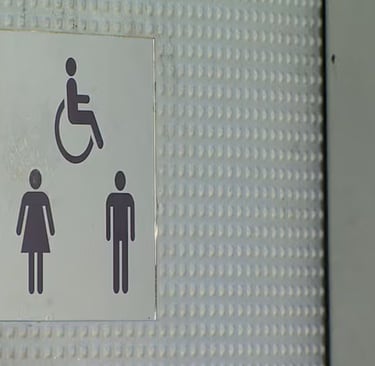
Mounting complaints about human feces in public spaces are pushing Vancouver officials to rethink how the city provides and manages public washrooms.
For former Vancouver resident Zoe Raffard, the issue became personal. Repeated encounters with human waste in and around East Vancouver’s Grandview Park eventually contributed to her decision to leave the city altogether.
“It just stressed me to see the park being used that way and not having anyone wanting to clean it up,” said Raffard, who moved to Vernon, B.C., last summer.
She said she repeatedly contacted the City of Vancouver through its 311 service, often without what she felt was a meaningful response.
“I would even offer them solutions like the Portland Loo or having an attendant to the existing washroom,” she said, adding that neighbours frequently tagged her in local Facebook posts about “poop at the playground.”
Her frustration comes as city council prepares to debate a new Washroom Strategic Framework, a staff report intended to make public washrooms easier to find, better maintained and more evenly distributed across Vancouver.
The framework, set for council discussion Tuesday, outlines several priorities for 2026. These include clearer signage, improved locks and sensors, better mapping of existing washrooms and stronger coordination with partners such as TransLink, the Vancouver Public Library and non-profit operators.
While the city says it already has an extensive washroom network, gaps remain. The Vancouver Park Board operates 129 public washrooms, accounting for about 83 per cent of all municipal facilities, according to the report.
The strategy also proposes integrating washrooms into future infrastructure projects and encouraging businesses to allow public access to private washrooms.
Public health and dignity concerns
Sarah Blyth, executive director of the Overdose Prevention Society, says the lack of accessible washrooms has serious public health implications.
“We really need to scale up public washrooms,” Blyth said. “After COVID, many shops and coffee places closed their washrooms and never reopened them. It’s not for businesses to operate public washrooms — the city needs to provide them.”
Her organization operates two staffed public washrooms in the Downtown Eastside, which together see between 15,000 and 22,000 visits each year. Both facilities narrowly avoided closure in 2024 after facing funding shortfalls before last-minute support from the city and province.
Businesses footing the bill
In neighbourhoods with heavy foot traffic, business groups say they’ve been forced to pick up the slack.
Landon Hoyt, executive director of the Hastings Crossing Business Improvement Association, said the lack of public washrooms led the BIA to launch its “Poop Fairy” cleanup program in January 2024.
Since then, crews have removed more than 5,200 instances of feces from streets and sidewalks. The program costs roughly $40,000 a year, paid directly by local businesses and property owners.
“Our businesses are paying that directly,” Hoyt said. “We should not be having to pay for it.”
He added that closures of drop-in spaces and shelters since the pandemic have worsened the problem.
Calls for faster action
Vancouver city councillor Pete Fry, who previously brought forward a motion calling for accessible washrooms and daytime drop-in spaces, says the proposed framework doesn’t move quickly enough.
“This is still a little bit slow-moving in my opinion,” Fry said, noting that Vancouver is set to host FIFA World Cup matches this year and will face increased pressure on public amenities.
Fry added that because many shelters operate only overnight, people often have nowhere to go during the day. Limited access to washrooms in some single-room occupancy (SRO) buildings can also push people to relieve themselves outdoors.
Raffard says she hopes the new strategy leads to real, tangible improvements — though past experiences have left her skeptical.
“Fingers crossed,” she said. “But there were other plans in the past, so sadly, I’m not optimistic.”
News
Stay updated with the latest BC news stories, subscribe to our newsletter today.
SUBSCRIBE
© 2026 Innovatory Labs Inc. All rights reserved.
LINKS