
Vancouver Port Approved to Dredge Burrard Inlet for Larger Oil Tanker Loads
Olivia Singh
6/25/20262 min read
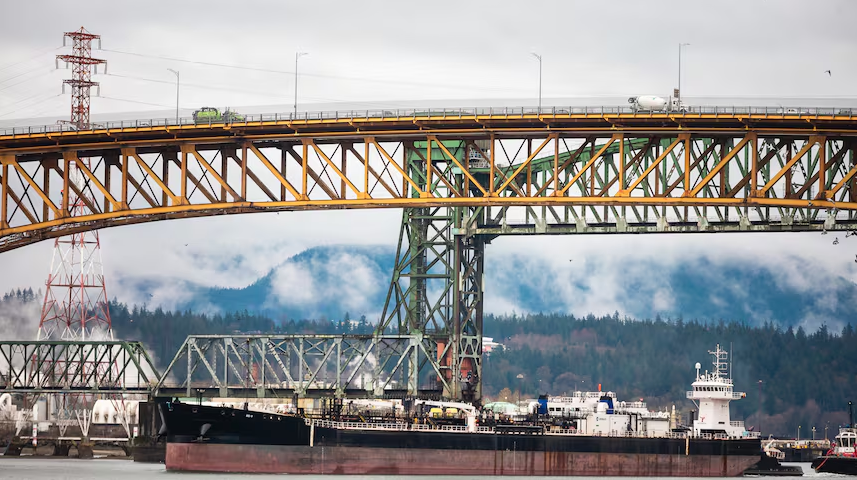
The Vancouver Fraser Port Authority says it has received all required federal permits to dredge parts of Burrard Inlet, a project intended to allow larger oil tankers to load more fully from the Trans Mountain pipeline.
The dredging will take place along the northern and southern edges of the navigation channel beneath Vancouver’s Second Narrows bridge.
The port authority says the work is scheduled to begin in September, though it has not said how long the project will take.
Project Intended to Increase Tanker Loads
The port authority, which oversees Canada’s largest port, says the dredging is needed so vessels loading at the Westridge Marine Terminal can carry more product.
That includes Aframax-class tankers, which can measure up to 250 metres long and have a draft of up to 16 metres.
Trans Mountain says those tankers generally load to about 80 per cent capacity in order to safely clear Burrard Inlet.
The port authority says the project will not change the number of vessels or the size of the largest vessels currently travelling beneath the Second Narrows bridge. Aframax-class tankers will remain the largest type of vessel using the route.
Governments Support Port Access Improvements
Prime Minister Mark Carney first raised the idea of dredging Burrard Inlet in 2025.
While the most recent federal budget does not specifically name the project, it includes broader commitments to improve access to overseas markets through investments in airport, rail and port infrastructure.
The B.C. government has also supported the project.
Energy Minister Adrian Dix previously said the dredging would allow for better port utilization and less traffic by enabling ships to load more fully.
The work comes about two years after the expanded Trans Mountain pipeline began operating in May 2024. Since then, there have been calls for further expansion to help diversify energy exports beyond the United States during trade tensions.
Environmental Concerns Raised
The dredging is moving ahead despite concerns from environmental groups about potential impacts on Burrard Inlet’s marine ecosystem.
The Sierra Club has warned that dredging beneath the Second Narrows bridge could disturb toxic sediments and harm recovering eelgrass, herring, salmon, seal and whale populations.
The port authority says the risk of contaminated sediment being disturbed and harming the marine environment is low.
It says the contractor will be required to monitor turbidity and pause work if needed.
More Than 50 Conditions Attached
The Vancouver Fraser Port Authority says it is committed to carrying out the work carefully and in collaboration with local communities and First Nations.
The project is subject to more than 50 conditions, including requirements to monitor and protect marine life and enhance kelp habitat.
The port says all in-water work will be limited to the least-risk window for fish and fish habitat, from mid-August to the end of February, as established by Fisheries and Oceans Canada.
According to a background document from the agency, most dredging will occur to a depth of about 1.3 metres, with a maximum depth of six metres below the sea floor. About 25,000 cubic metres of material is expected to be removed.
The port authority says that amount is less than one per cent of the material it removes annually from the Fraser River through its maintenance dredging program.
The project also includes removing sections of two decommissioned Metro Vancouver waterlines and installing navigation aids.
News
Stay updated with the latest BC news stories, subscribe to our newsletter today.
SUBSCRIBE
© 2026 Innovatory Labs Inc. All rights reserved.
LINKS