
Vancouver Mom Launches Kid-Safe Social Platform Amid Global Debate Over Youth Social Media Bans
Noah Chen
2/18/20263 min read
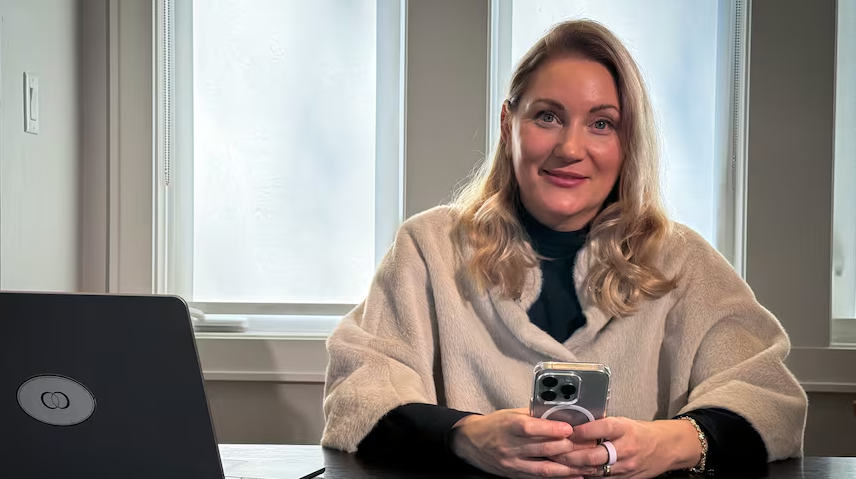
When her teenage daughter experienced cyberbullying after getting her first smartphone, Vancouver parent Natalie Boll was stunned — even with a career in film and television that had made her familiar with social media’s inner workings.
“My first reaction was, ‘Let’s go offline,’” Boll recalled. She deleted her own accounts and her daughter’s, hoping to shield her family from harm.
But the decision came with unintended consequences. Boll lost contact with professional networks built over 15 years, and her daughter felt increasingly isolated from friends who connected primarily online.
“It shouldn’t be a choice between harmful platforms with addictive algorithms and total withdrawal,” Boll said.
That realization led to the launch of Tribela, a new Canadian social media platform designed with what Boll calls “safety-by-design protocols.”
A different kind of social feed
Tribela aims to reduce many of the features critics say contribute to anxiety and overuse among young people.
There are no public follower counts, no “likes,” no autoplay videos, and no endless scrolling. Automatic moderation filters out profanity, sexually explicit material, and violent content. Users have greater control over what appears in their feeds.
“We didn’t want to build something that keeps people on as long as possible,” Boll said. “We wanted a space where you can connect with friends, engage with content, and then go live your life.”
The platform was developed with input from advisors including researchers connected to Oxford University. Boll says the goal is to create a healthier middle ground between “digital detox” and “doomscrolling.”
The launch comes amid growing global scrutiny of major platforms. Australia recently introduced a ban on social media access for children under 16, and several jurisdictions in North America are exploring tighter regulations. In the United States, legal challenges against major tech companies continue over allegations related to child safety and online harms.
In Canada, debate continues over whether to pursue age-based restrictions or broader regulatory reform.
Support — and caution
Former Ontario Crown attorney Margot Denommé, who has written extensively about digital safety and consulted on Tribela’s development, says preventive design is key.
“Unregulated social media is simply not safe,” Denommé said. She encourages parents to delay social media use “as long as humanly possible,” but says when families decide the time is right, safer alternatives should exist.
Others argue that alternative platforms are only part of the solution.
Robin Sherk, a parent advocate with Unplugged Canada, supports social media age minimums and smartphone delays. She welcomes new safety-focused platforms but says broader protections are still needed.
“It’s exciting to see healthier online spaces being built,” Sherk said. “But that doesn’t change the reality of what most kids are using right now.”
Digital rights advocate Matt Hatfield, executive director of OpenMedia, says the emergence of more intentionally designed platforms is encouraging. However, he notes that newer networks often struggle with the “network effect” — the challenge of attracting enough users to make the platform meaningful.
“If you’re the only one using it, it’s not very useful,” Hatfield said.
Hatfield hopes Canada will revisit online harms legislation, arguing that platforms should have a clear “duty of care” to reduce users’ exposure to illegal and harmful content.
A young perspective
Boll’s daughter, Angelina Dinh, now 19 and helping develop Tribela, remembers feeling trapped in unhealthy digital environments as a teen.
She describes exposure to anonymous criticism, unrealistic beauty standards, and constant comparison.
“It’s just not a healthy environment,” Dinh said. “You grow up either feeling really negative about yourself or projecting negativity onto others.”
Still, she cautions against outright bans.
“When I was younger, I didn’t want to get off social media — even though I knew it was hurting me — because everyone was on it,” she said.
Dinh believes the responsibility should not rest solely on young users.
“As much as we tell 12- to 17-year-olds to be better on their phones, they’re still developing,” she said. “Platforms need to be responsible too.”
As debates over age limits and regulation continue, Boll hopes Tribela represents a proof of concept — that social media can be built differently, with safety as the foundation rather than an afterthought.
News
Stay updated with the latest BC news stories, subscribe to our newsletter today.
SUBSCRIBE
© 2026 Innovatory Labs Inc. All rights reserved.
LINKS