
Vancouver Debates Official Development Plan That Will Shape City Growth to 2050
Sarah Desjardins
3/10/20262 min read
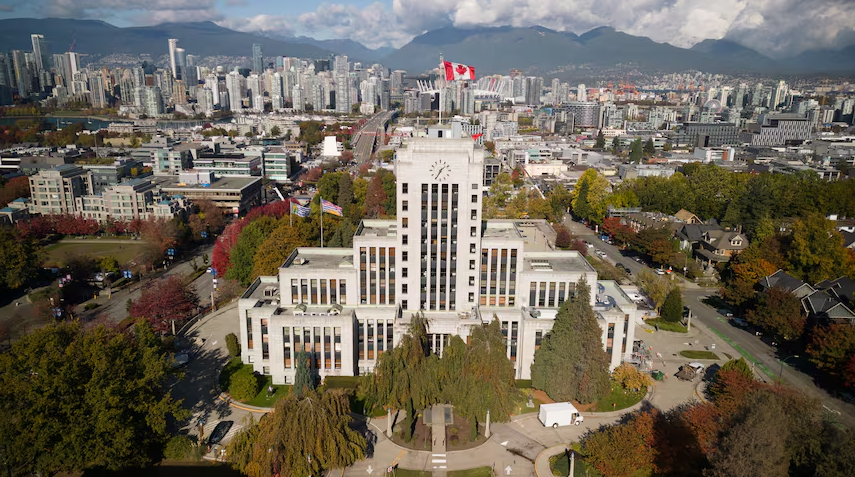
The future of development in Vancouver over the next 30 years is now up for debate as city council considers a proposed Official Development Plan that would guide how the city grows through 2050.
The plan — known as the Official Development Plan (ODP) — sets out where housing, businesses, transportation networks and public spaces will be built as the city prepares for a significant population increase.
City planners say the proposal brings together multiple policies and long-term strategies into a single framework that would provide a clearer vision for Vancouver’s future.
If adopted, all future development in the city would need to align with the plan.
Preparing for a growing city
According to city projections, Vancouver’s population is expected to grow by about 240,000 people by 2050, bringing the total population close to one million residents.
The ODP builds on the Vancouver Plan approved by council in 2022, but differs in one key way: it would be formally adopted as a city bylaw.
That legal status means future development proposals must comply with the plan’s framework.
The provincial government has also required the city to adopt an official development plan by June 30.
Changes to public hearing rules
One of the most significant impacts of adopting an ODP is how development proposals would be reviewed.
Under provincial legislation, projects that align with the official development plan — and include at least 50 per cent residential space — would no longer require a public hearing.
Instead, those projects would still go through staff review and public consultation before council votes on them during regular council meetings.
City officials say the goal is to streamline housing approvals while still allowing public input during earlier planning stages.
Debate over public consultation
The proposal has sparked debate among current and former city politicians.
Sarah Kirby-Yung said residents want clarity about how their neighbourhoods will evolve.
“They’re passionate about their neighbourhoods,” she said. “They want to understand how policies and plans are going to shape change.”
But critics argue the process has not involved enough direct consultation with residents.
Colleen Hardwick said the plan risks imposing decisions from planners rather than reflecting the views of the community.
“Instead of representing the will of the people, we are imposing our will on you,” she said.
Others disagree with that characterization.
Former councillor Adriane Carr said the plan reflects years of engagement with residents about how the city should grow.
“It was the public themselves who said we need a more fair distribution and more robust amounts of really affordable housing,” Carr said.
A blueprint for future neighbourhoods
The proposed plan would also consolidate several existing city policies, including Vancouver’s housing strategy and climate action plans.
It would continue planning efforts already underway, including major initiatives like the Broadway Plan and the Cambie Corridor Plan.
Key planning concepts include:
Higher density development around SkyTrain stations
Multiplex housing across neighbourhoods
Walkable community “villages” with shops and services nearby
City planners say the strategy also addresses an imbalance in how Vancouver’s land is currently used.
As of 2025, low-density neighbourhoods occupy about 65 per cent of residentially zoned land while housing only about 35 per cent of the city’s population, according to planning documents.
Officials say increasing housing density in some areas will help support local businesses and services while addressing the city’s ongoing housing shortage.
Public hearing underway
The official development plan will be discussed during a public hearing beginning at 6 p.m. in Vancouver city council chambers, with the meeting also livestreamed online.
The debate is expected to shape the framework that will guide Vancouver’s growth for decades to come.
News
Stay updated with the latest BC news stories, subscribe to our newsletter today.
SUBSCRIBE
© 2026 Innovatory Labs Inc. All rights reserved.
LINKS