
Vancouver Begins Injecting Ash Trees to Fight Invasive Emerald Ash Borer
Subhadarshi Tripathy
8/26/20252 min read
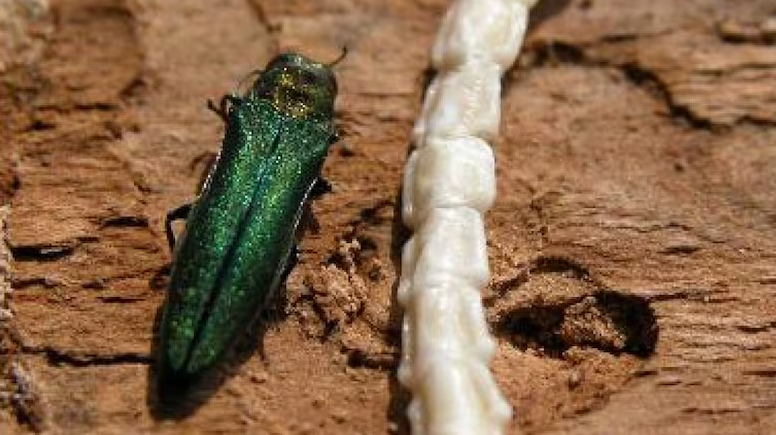
The City of Vancouver has begun injecting ash trees with an insecticide in an effort to protect them from the emerald ash borer, a highly destructive beetle first detected in B.C. last year.
A Spreading Threat
The emerald ash borer, native to Asia, has devastated ash populations in eastern Canada and the United States since it was first detected near Detroit and Windsor in 2002. The Canadian Food Inspection Agency (CFIA) confirmed the beetle’s presence in Vancouver in 2024, and more recently in Surrey, raising alarms about the survival of Metro Vancouver’s ash trees.
Ash trees make up about five per cent of Vancouver’s tree population, roughly 8,600 trees in total. City officials say losing them would cause “significant canopy loss,” reducing shade, air quality, and cooling during hot summers.
“Cities heat up without tree canopies, and air quality is diminished,” said Richard Hamelin, chair in forest conservation at the University of British Columbia. “The consequences of losing ash trees in urban spaces are tremendous.”
How the Beetle Kills
Female beetles lay eggs inside ash trees. Once hatched, larvae burrow through the tree’s inner layers, cutting off its ability to transport water and nutrients. The process kills trees within two to five years.
Although B.C. has only one native ash species — the Oregon ash, found in the lower Fraser Valley — urban plantings across Vancouver make the region vulnerable to infestations.
City’s Response
Throughout August, the city has been injecting ash trees with TreeAzin, a pesticide applied directly into the trunk. Officials say the treatment targets only insects feeding on the trees.
“This program is intended to prolong the lives of Vancouver’s ash trees, but it does not guarantee full protection,” a Vancouver Park Board spokesperson said.
Surveillance has identified hotspots of beetle activity in downtown, Strathcona, and more recently around Sunrise Park in East Vancouver. However, officials emphasized that no mass die-off has been observed so far.
Containment Zones
The CFIA has created containment zones in the University of B.C. Endowment Lands, Vancouver, Burnaby, New Westminster and Surrey. Moving ash material — including logs, branches, and firewood — outside these zones is now prohibited without federal approval.
“Effective immediately, ash material and all species of firewood cannot be moved outside the regulated area,” the CFIA said.
Looking Ahead
Researchers and officials stress that public awareness will be critical. Residents are encouraged to report ash trees showing signs of infestation.
For the Syilx and other Indigenous Nations, and for city planners, the battle to save ash trees carries environmental, cultural, and community importance.
“They are considered relatives, not resources,” said Hamelin, “and their survival marks an important part of environmental and cultural resilience.”
News
Stay updated with the latest BC news stories, subscribe to our newsletter today.
SUBSCRIBE
© 2026 Innovatory Labs Inc. All rights reserved.
LINKS