
The red fire retardant that saves communities — but may put ecosystems at risk
Noah Chen
9/15/20252 min read
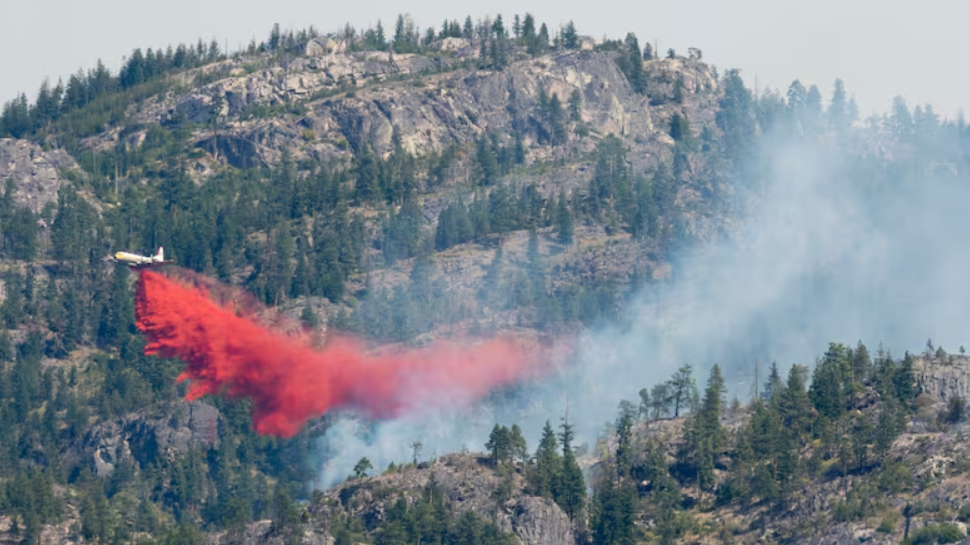
Fire crews across British Columbia rely on aircraft drops of red-tinted retardant to slow advancing wildfires, a tactic used worldwide since the mid-20th century. But while these solutions save lives and property, researchers say their long-term environmental impact remains poorly understood.
What’s in the mix
Since 2009, B.C. Wildfire has primarily used Phos-Chek LC-95A, produced by U.S.-based Perimeter Solutions. Its key ingredient is ammonium polyphosphate — a common fertilizer — with iron oxide added to give the substance its signature red colour. Diluted with water, it clings to trees, brush and buildings, cutting oxygen from flames and creating a buffer for crews on the ground.
Although assumed safe when properly applied, Phos-Chek’s full chemical formula is proprietary. Researchers have flagged that its phosphorus and ammonia components can harm fish and amphibians if it enters waterways, prompting B.C. Wildfire to ban drops near streams, lakes and rivers.
Accidents raise questions
In 2020, Alberta researchers studied a spill into North Racehorse Creek, southwest of Calgary. A year later, phosphorus-rich sediments were still detected six kilometres downstream, challenging assumptions that retardants simply flush away. “We found they can be stored long term and move downstream,” said Madelyn Lux, the study’s lead author.
Similar concerns surfaced in the United States, where a court ruled in 2022 that the U.S. Forest Service had violated the Clean Water Act by discharging retardant into waterways without permits. The judge allowed use to continue with permits, citing its lifesaving role.
Balancing benefits and risks
Canadian researchers emphasize that while retardant misapplications are rare, their risks pale in comparison to wildfire destruction — which can permanently alter watersheds through erosion, turbidity and degraded water quality.
“Without these products, it would be even worse,” said Laval University professor Evelyne Thiffault, noting that retardants are reserved for high-risk situations where homes and communities are threatened.
Still, questions remain. A 2024 study of uncoloured Phos-Chek samples detected toxic metals such as chromium and arsenic. Scientists are exploring alternatives like cellulose-based retardants that may offer effective fire control with fewer ecological costs.
Growing use with climate change
B.C. Wildfire data show the highest volumes of retardant have been used in the province’s worst seasons — 2017, 2018, 2021 and 2023. With climate change fuelling hotter, drier conditions, experts expect that reliance to increase.
“Accidents will inevitably happen,” said University of Alberta hydrologist Uldis Silins. “That’s why it’s crucial we keep studying these products, so we fully understand the trade-offs.”
News
Stay updated with the latest BC news stories, subscribe to our newsletter today.
SUBSCRIBE
© 2026 Innovatory Labs Inc. All rights reserved.
LINKS