
Southern resident killer whales facing slow slide toward extinction, experts warn
Liam O'Connell
10/13/20252 min read
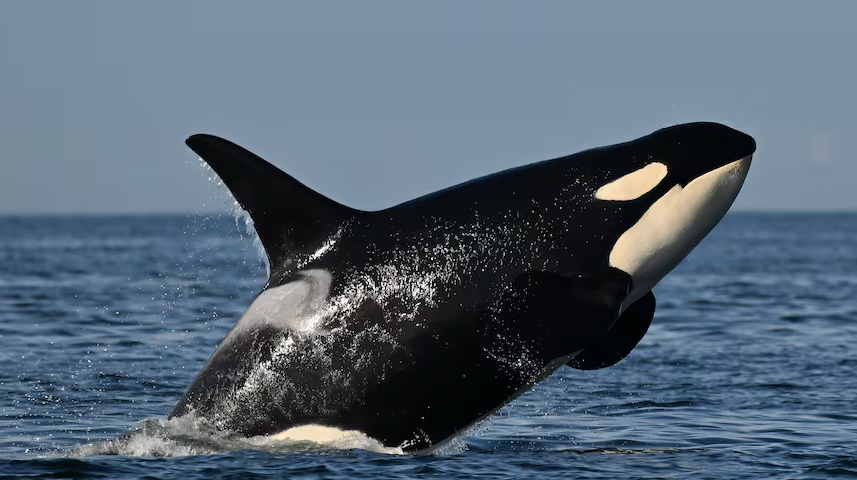
The latest annual census of southern resident killer whales paints a sobering picture of one of the West Coast’s most iconic species — holding steady on paper, but in quiet decline beneath the surface.
Researchers with the Center for Whale Research say that without urgent conservation measures, the orcas that patrol the waters off southern British Columbia and Washington state could lose an entire pod within the next half-century.
“We’re not talking about extinction in five years,” said Michael Weiss, the centre’s research director. “But there’s a very real possibility that at least one of the pods won’t survive the next 50.”
Few births, more losses
The July 1 population count found 74 southern resident orcas, up by just one from last year. Researchers recorded four births, but only two calves survived. One adult male from K pod, known as K26, went missing and is presumed dead — a major genetic blow.
“These whales are highly inbred,” Weiss explained. “That low genetic diversity affects their ability to survive disease and environmental stress. It’s like having all your eggs in one very fragile basket.”
The population’s reproductive future looks equally fragile. Only 27 males are of breeding age — and Weiss says fewer than half are actively reproducing. The oldest and most successful breeders are dying faster than they can be replaced.
K pod on the brink
Of the three pods — J, K, and L — K pod is in the worst shape, with just 14 remaining whales, matching the lowest number ever recorded.
“What’s really concerning about K pod is they’re simply not reproducing,” said Weiss. “There hasn’t been a new calf in that group since 2022 — and before that, almost a decade.”
By contrast, J pod is the only one showing modest growth, thanks to lower adult mortality in recent years. Still, even those gains could reverse quickly if food supplies continue to shrink.
Hunting in a noisy, empty ocean
For southern residents, the primary threat remains the collapse of Chinook salmon, their main food source. Unlike their northern relatives, which can adapt to other fish, southern residents are highly dependent on this single species — and they’re competing for what’s left.
“These whales are essentially getting the last crack at the salmon,” Weiss said. “By the time Chinook reach their feeding grounds, they’ve already passed through commercial fisheries and other killer whale populations.”
Restoring freshwater spawning habitat, he said, and shifting fisheries away from open-ocean Chinook stocks are key to recovery.
Compounding the problem are pollutants and noise from tankers, cruise ships, and freighters that rumble daily through orca territory. The din interferes with their ability to hunt by sound.
“They’re trying to find food on what’s basically an underwater highway,” Weiss said. “It’s hard enough when there’s less salmon — it’s almost impossible when you can’t hear them.”
A warning, not yet a eulogy
Despite the grim data, Weiss and his team say it’s not too late. Targeted restoration, smarter fisheries management, and stricter vessel regulations could still stabilize the population.
But time is running out. Only 11 of the 74 whales are under the age of 10 — a demographic imbalance that underscores what Weiss calls a “slow-motion collapse.”
“The southern residents are hanging on,” he said. “But without real, coordinated action, we’re watching them fade away — one pod at a time.”
News
Stay updated with the latest BC news stories, subscribe to our newsletter today.
SUBSCRIBE
© 2026 Innovatory Labs Inc. All rights reserved.
LINKS