
Quesnel’s ‘Red Carpet’ Recruitment Drive Is Bringing U.S.-Trained Doctors to Northern B.C.
Liam O'Connell
7/2/20264 min read
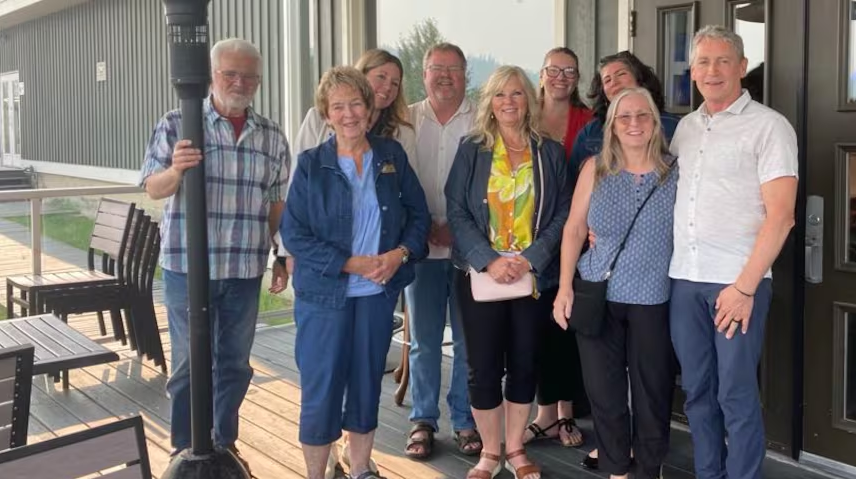
The northern British Columbia city of Quesnel says a highly personalized strategy to recruit physicians is beginning to deliver tangible results, with U.S.-trained doctors committing to the community at a time when rural health-care shortages remain a major concern across the province.
Local officials say at least four American-trained physicians are expected to be working in Quesnel by the end of the summer, a development they describe as a significant step forward for a community that has long faced pressure on primary care and physician access.
The recruitment push is part of a broader effort underway in British Columbia to attract health-care professionals trained in the United States, particularly as some seek opportunities in Canada amid political and professional uncertainty south of the border. But in Quesnel, officials say the groundwork for this kind of outreach was laid years earlier.
A Local Strategy Years in the Making
Samantha Mtatiro, the City of Quesnel’s health-care recruitment co-ordinator, says the community has been investing in physician recruitment for more than a decade. Her role was created 12 years ago, well before the province launched its more recent efforts to bring in more U.S.-trained doctors and other health professionals.
That long-term investment, she says, has allowed Quesnel to move quickly as interest from outside Canada has intensified.
For Mtatiro, the past year has been especially busy. She says the pace of recruitment has accelerated sharply, with growing interest from both U.S.-trained physicians and other health-care workers who are considering relocating to northern B.C.
The result, she says, has been a wave of new commitments that are starting to reshape the local health-care picture.
Doctors Already Arriving
According to Northern Health, two U.S.-trained physicians have already decided to move to Quesnel over the past year — one a family physician and the other an emergency medicine specialist.
Two more are expected later this summer.
Health officials say the community has also added two part-time physicians over the same period, while three family physicians working toward B.C. licensure have also relocated there. Northern Health says several additional candidates are also progressing through the recruitment pipeline, with more expected in the coming months.
Taken together, those additions suggest that Quesnel is making measurable progress in an area where many rural communities continue to struggle.
The ‘Red Carpet’ Approach
Mtatiro credits much of that success to what the city calls its “red carpet” recruitment model.
Rather than relying solely on formal job postings or administrative outreach, the community has built a hands-on, customized approach designed to show recruits what daily life in Quesnel would actually feel like.
That often includes specially arranged visits tailored to the interests of the physician or health-care worker being recruited. A luncheon with the mayor and other local leaders may be part of the experience, along with activities meant to showcase the community itself.
If a recruit enjoys mountain biking, the visit may include trails and outdoor recreation. If they enjoy fishing, the itinerary may be built around that. The goal, Mtatiro says, is to make the experience personal, welcoming and memorable.
The message is not only that Quesnel needs physicians — it is that the city wants them to imagine a life there.
Changing Perceptions of Rural Practice
A major part of the recruitment effort involves challenging assumptions about what a smaller northern community can offer.
Mtatiro says many physicians and residency candidates arrive expecting a limited or isolated rural environment, only to discover a city with far more amenities than they anticipated.
She says recruits are often surprised by the range of restaurants, services and medical infrastructure available in Quesnel, as well as by the appeal of the downtown core and the surrounding lifestyle.
That reaction, she says, has become one of the strongest drivers of the city’s success. Once people visit, many begin to see the community differently — not as remote in a negative sense, but as accessible, livable and full of character.
Pressure to Improve Access
The recruitment gains come as Quesnel works to reduce longstanding wait times for family doctors and improve access to care for residents.
Like many communities in northern and rural British Columbia, Quesnel has faced persistent physician shortages that have strained both primary care and emergency services. Local officials say adding more trained doctors should help relieve some of that pressure and improve continuity of care for patients who have struggled to find a regular provider.
For a city of roughly 10,000 people, even a handful of physician arrivals can have a meaningful effect.
Part of a Province-Wide Effort
Quesnel’s campaign is unfolding alongside a wider provincial effort to attract U.S.-trained health-care workers to British Columbia.
In March, the B.C. government said more than 400 health-care professionals trained in the United States had accepted jobs in the province over a one-year period. Provincial figures showed that between March 2025 and January 2026, that total included 89 doctors, 42 nurse practitioners, 260 nurses and 23 allied health professionals.
The province has framed the effort as part of its response to staffing shortages, especially in rural and underserved areas where recruitment has historically been difficult.
Quesnel appears to be one of the communities benefiting most visibly from that strategy — in part because it already had its own recruitment machinery in place.
A Small City With a Big Pitch
What sets Quesnel apart, local officials suggest, is not simply that it is recruiting, but how it is recruiting.
The city is selling more than job openings. It is selling lifestyle, belonging, and the idea that physicians can build both a career and a life in a smaller community without sacrificing professional opportunity or quality of living.
That kind of pitch is increasingly important in a competitive environment where rural communities across Canada are trying to draw from the same limited pool of health-care professionals.
For Quesnel, the early results suggest the strategy is working.
And for residents who have waited too long for access to family doctors, each successful recruitment is more than a staffing update — it is a sign that relief may finally be arriving.
News
Stay updated with the latest BC news stories, subscribe to our newsletter today.
SUBSCRIBE
© 2026 Innovatory Labs Inc. All rights reserved.
LINKS