
Chronic Wasting Disease: A Silent Threat in Kootenay
Shraddha Tripathi, Noah Chen, Lucas Tremblay
3/18/20254 min read
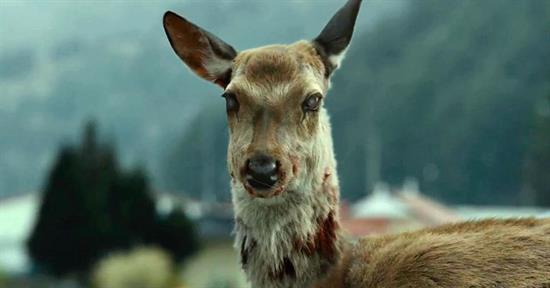
On a crisp spring morning in Cranbrook, the mist hangs low over the valley, curling around the firs and pines like a living shroud. For most residents, it is a familiar scene, part of daily life in British Columbia’s Kootenay region. But beneath the quiet beauty, a silent predator has begun its insidious work. Chronic Wasting Disease, or CWD, a prion-based illness affecting deer and other cervids, has been confirmed in three separate cases this year. For wildlife experts, Indigenous communities, hunters, and local policymakers, the news is deeply unsettling.
Robin Louie, Ktunaxa Nation Council (knowledge keeper/executive)was among the first to express alarm. “Our people have relied on these herds for generations,” she told Peazzi in a somber interview. “It is not just about food. The deer are part of our cultural and spiritual fabric. If they disappear, it is not something we can simply replace with regulation or science.” Her words carried the weight of centuries of relationship with the land, a reminder that CWD is not merely an ecological problem, but a cultural and social one.
In the weeks following the first confirmed cases, Peazzi reporters traveled across the Kootenay region, speaking to hunters, wildlife officers, and residents. Jesse Zeman, Executive Director, BC Wildlife Federation (BCWF), described the growing fear among his members. “We know the disease spreads silently,” he said. “Prions can remain in the soil for years. A single infected animal can contaminate an area, and suddenly you have an epidemic.” Doucet recounted cases in other provinces where deer populations had declined drastically due to CWD, and he fears the same trajectory could unfold here if decisive action is not taken.
Cait Nelson, Wildlife Health Biologist, B.C. Ministry of Forests, explained the mechanics of the disease in detail. “CWD is unique in its resilience,” she said. “It is not transmitted by typical pathogens like bacteria or viruses. The prions that cause CWD are misfolded proteins that can persist in the environment, resisting heat, disinfectants, and decomposition. Once the disease is present in a herd, it can continue spreading for years, even decades without clear symptoms appearing in every individual.” Her research, which includes fieldwork in Alberta and Saskatchewan, indicates that deer in high-density areas are particularly susceptible to rapid transmission.
One such area is a corridor between Cranbrook and Kimberley, where deer populations are estimated to be 30% higher than the provincial average. GIS mapping obtained from provincial environmental datasets reveals overlaps between deer habitats, urban boundaries, and key water sources - critical factors in understanding the disease’s potential spread. Peazzi reporters walked these areas, observing herds grazing near residential zones, oblivious to the invisible threat looming among them.
Local hunters, too, have voiced concern over both practical and ethical implications. “It’s heartbreaking,” said Linda Barrett, a retired wildlife officer and avid hunter. “You spend your life learning how to hunt sustainably, respecting the land and the animals. Then suddenly, a disease arrives that undermines all of that, and you’re forced to think about culling healthy animals to save the herd.” Barrett has been actively participating in volunteer monitoring programs, tagging and tracking deer movements, and reporting unusual behaviors to provincial authorities.
In response to the outbreak, the B.C. Ministry of Environment initiated targeted culling programs, aimed at reducing high-risk populations and containing the disease. The culls are controversial. Residents have taken to town halls to protest, questioning both the ethics and effectiveness of the measures. “We are taking animals that appear healthy and removing them,” said Dr. Caeley Thacker, Provincial Wildlife Veterinarian. “It’s a necessary intervention to prevent catastrophic spread, but it is not a decision made lightly. Balancing ecological health with community values is incredibly challenging.”
The cultural dimension adds complexity. For the Ktunaxa Nation, hunting is not just a means of sustenance. It is intertwined with ceremony, teaching, and intergenerational knowledge transfer. Restricting or modifying hunting practices, even temporarily, has profound implications. Robin Louie explained, “We can adapt our practices, but the loss of a herd is not something that science alone can restore. We need to work collaboratively to protect both the animals and our traditions.”
Scientific and policy perspectives converge in unexpected ways. Cait Nelson emphasizes the importance of data collection, noting that every new case provides insight into prion transmission. “Each deer we test, each environmental sample we analyze, improves our predictive models,” she said. “Without this granular understanding, culling and containment become guesswork.”
Peazzi reporters also documented instances of local experimentation in mitigation. In Kimberley, volunteers have installed deer-proof fencing around critical water sources to prevent congregation and contamination. In other areas, communities are experimenting with feeding schedules to disperse herds more evenly, reducing high-density clustering. These local adaptations, while small in scope, illustrate a growing willingness to engage in proactive management, even amid uncertainty.
The economic dimension is another layer often overlooked. Kootenay’s economy is partially reliant on hunting tourism. Local outfitters, guides, and hospitality businesses depend on healthy deer populations to attract clients. A severe outbreak of CWD could devastate these livelihoods. “If word gets out that the deer are diseased, it will not just affect hunters,” said Mark Reynolds, a local guide with 25 years of experience. “It will affect hotels, restaurants, even fuel sales. The ripple effect is enormous.”
Beyond economics, there is a psychological toll. Residents describe a creeping unease when they walk through forested areas where deer once roamed freely. “You can’t help but notice that the herd seems smaller, more cautious,” said a longtime resident of Cranbrook. “And when you hear that there’s a disease out there, it makes every walk in the woods a little more tense.”
In parallel, universities and conservation groups are analyzing the genetic implications of CWD on deer populations. Preliminary findings suggest that repeated exposure to prions could influence herd genetics over generations, potentially reducing resilience to other diseases. Cait Nelson explains, “We’re beginning to see subtle shifts, not just in behavior, but in genetic markers. It’s an area of ongoing research, and one that underscores the long-term consequences if the disease is not controlled.”
The provincial government, recognizing the multifaceted nature of the threat, has launched a public awareness campaign, disseminating guidelines on safe handling of deer carcasses, reporting suspected cases, and complying with temporary hunting restrictions. Workshops, led by wildlife officers and Indigenous leaders, are taking place in small communities, fostering dialogue and cooperative action. Yet despite these efforts, uncertainty persists. “We are in uncharted territory,” admitted an anonymous government official. “CWD is not just a wildlife problem. It intersects with culture, economy, public perception, and ecological health. The solutions are never simple.”
As the day wanes, the sun breaks through the mist, illuminating the valley in golden light. Deer graze along the edges of the forest, their movements cautious yet unaware of the invisible threat. Hunters, residents, and conservationists alike watch, knowing that the next steps taken - culling, monitoring, education will determine whether these herds endure or fade into memory.
Chronic Wasting Disease, silent and relentless, challenges the Kootenay region on multiple fronts. It is a biological puzzle, a social dilemma, and a test of human and ecological stewardship. For those living here, it is a reminder that even in the most serene landscapes, the balance between nature and human action is fragile, and vigilance is indispensable.
News
Stay updated with the latest BC news stories, subscribe to our newsletter today.
SUBSCRIBE
© 2026 Innovatory Labs Inc. All rights reserved.
LINKS