
Cocaine in the Shadows: How Mexican Cartels Are Using B.C. as a Gateway
Shraddha Tripathi, Sarah Desjardins, Emma MacLeod
11/25/20245 min read
In the early hours of a fog-laden morning at Vancouver’s bustling port, the usual clatter of containers being loaded onto freighters takes on a different weight. Beneath the hum of cranes and forklifts lies a hidden world - one of encrypted communications, concealed shipments, and the ever-watchful eyes of law enforcement racing to intercept illicit activity. In recent months, Canadian authorities have uncovered a disturbing trend: Mexican drug cartels are increasingly routing cocaine through British Columbia, exploiting the province’s ports, trade infrastructure, and proximity to the U.S. border.
Cpl. Arash Seyed, RCMP Federal Policing - Pacific Region spoke with Peazzi in a rare interview, emphasizing the sophistication of these operations. “These networks are highly organized, operating with precision across multiple cities and provinces. They are constantly adapting, using encrypted phones, GPS-enabled drop points, and even insider knowledge of shipping logistics to move their product undetected.” Zhang’s words capture the high-stakes game unfolding in what outwardly seems like an ordinary port city.
The human toll is evident in local communities. In Surrey, where some of the cartel activity was first traced, parents and business owners describe an uptick in drug-related crime and gang presence. One local father recounted, under the condition of anonymity, “You hear about this on the news, and it seems distant. Then you notice strange cars, unfamiliar faces, kids skipping school, and suddenly it hits home. You realize it’s not just statistics, it's your street.”
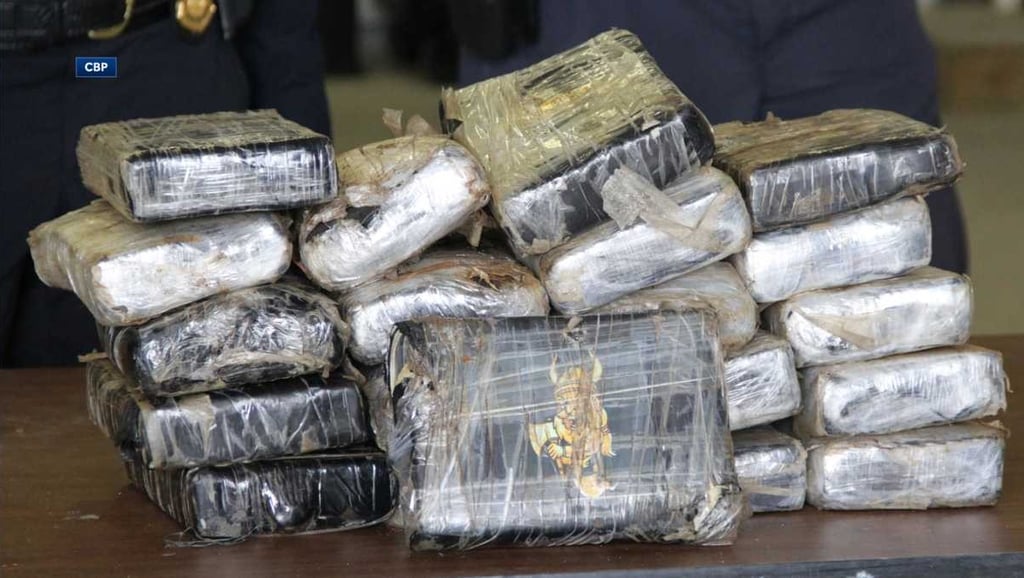
The story of a single seizure illustrates the complexity of the network. In November, RCMP intercepted a shipment concealed within a stack of legitimate goods. The haul contained more than 70 kilograms of high-purity cocaine, with an estimated street value exceeding seven million Canadian dollars. Court documents obtained by Peazzi reveal the use of burner phones, coded messages, and multiple drop points spanning Vancouver, Burnaby, and Port Moody. It was a network designed for resilience: even if one courier were apprehended, the operation could continue with minimal disruption.
Peazzi’s reporting also explored the financial machinery underpinning these movements. By tracking publicly available company records and cross-referencing shipping manifests, we discovered that some smaller logistics firms unknowingly or otherwise were facilitating the flow of goods used by cartels. Encrypted communications allowed operators to coordinate shipments without exposing themselves to direct legal liability, illustrating how criminal ingenuity can exploit legal and logistical systems designed for efficiency and transparency.
The community impact is multifaceted. Beyond the risk of violent crime, the presence of cartels alters social dynamics. Local youth, particularly those in economically vulnerable neighborhoods, face new pressures. One high school teacher, speaking anonymously, described students becoming involved in minor courier activities or witnessing recruitment attempts. “Even if they aren’t directly handling drugs,” the teacher said, “the normalization of criminal behavior is concerning. It changes how a generation views authority and opportunity.”
Experts provide context for these developments. Prof. Kevin Quigley, Dalhousie University, quoted in the Delta “Policing Our Ports” report, remarked, “Canada’s ports are a double-edged sword. They facilitate legitimate trade, which drives the economy, but their openness is exploited by organized crime. Cartels are extremely adaptive, and even sophisticated enforcement cannot anticipate every route or method.”
Nina Patel, Regional Director General (Pacific), CBSA, offered a more operational perspective. “We have improved scanning technologies and intelligence-gathering methods,” she explained. “But criminals continuously innovate. It is a constant race between detection and evasion. The volume of legitimate trade creates opportunities to hide illicit activity, and even a single lapse can have wide-reaching consequences.”
The RCMP’s investigations revealed not only the operational sophistication of the cartels but also the networked nature of crime itself. Seized evidence included ledger-like documents detailing drop points and distribution channels across multiple provinces. Affidavits describe coordination meetings in inconspicuous locations, such as coffee shops, warehouses, even recreational centers, where couriers, middlemen, and planners devised routes and schedules with military-like precision. The scale of planning challenges any notion that organized crime operates in isolated bursts; this is a methodical, ongoing strategy.
For Vancouver residents, the implications extend beyond public safety. Businesses report increased insurance premiums, heightened security costs, and concerns about employee exposure to criminal activity. Mark Reynolds, owner of a logistics company, described the unease: “You try to run a normal business, but you’re constantly aware that a shipment could be compromised, or someone within your supply chain could unknowingly be used for criminal purposes. It’s stressful, and it changes how we operate.”
The provincial government has responded with a multipronged strategy. Investments in advanced scanning technology, partnerships with U.S. law enforcement, and intelligence-sharing initiatives have all been implemented. Yet, as analysts point out, enforcement is reactive by necessity, often trailing the innovative methods employed by cartels. “These networks do not operate in isolation or predictably,” said Christian Leuprecht, national-security scholar (RMC/Queen’s). “They exploit gaps in jurisdiction, leverage technology, and adapt faster than policy frameworks can adjust. Without proactive measures, we are always catching up.”
Beyond enforcement, Peazzi uncovered efforts at community resilience. Local outreach programs, often run by nonprofit organizations, educate youth about the risks of involvement with gangs or drug networks. Workshops for parents, teachers, and business owners emphasize early detection of suspicious activity, reporting mechanisms, and collaborative engagement with law enforcement. While these initiatives cannot dismantle a cartel, they foster awareness and mitigate some of the social risks associated with its presence.
The human dimension is stark. Residents of affected neighborhoods describe a subtle but persistent fear. One mother in Burnaby recounted, “I tell my kids to be careful, to notice strangers, to report anything unusual. It’s not paranoia, it's awareness. But it’s exhausting, living like this.” Law enforcement acknowledges the stress inflicted on communities, noting that fear itself can disrupt social cohesion, reduce trust, and impair community development.
Meanwhile, cartels continue to refine their strategies. Analysis of seized communications revealed experimentation with new concealment methods, cross-border courier rotations, and digital payment networks to avoid detection. Cpl. Arash Seyed emphasized that the sophistication and adaptability of these networks are what make them so dangerous. “This isn’t low-level trafficking,” he said. “These are highly organized, well-financed operations with the resources to survive setbacks. Our challenge is to stay ahead without compromising public safety.”
Peazzi reporters also examined the geopolitical context. Analysts suggest that tighter U.S. border enforcement has inadvertently shifted cartel activity northward. By routing shipments through Canadian ports and leveraging the relatively open trade environment, cartels can bypass some U.S. monitoring systems. While cross-border cooperation has improved, the legal and operational complexities of coordinating multiple jurisdictions present ongoing challenges.
For residents and policymakers alike, the situation underscores a delicate balance: between maintaining the flow of legitimate commerce and preventing criminal exploitation, between protecting vulnerable populations and respecting privacy and civil liberties, between reactive enforcement and proactive intervention. In the shadows of Vancouver’s port cranes, these questions are not theoretical; they are daily realities shaping how communities live and work.
As the sun sets over the harbor, container ships silhouetted against the glowing skyline, the scale of the challenge becomes apparent. Cocaine shipments are intercepted, networks are dismantled, arrests are made but for every operation thwarted, new strategies emerge. The cat-and-mouse game continues, played out in warehouses, courtrooms, and community halls across British Columbia.
Ultimately, the story of cocaine trafficking through B.C. is about more than drugs; it is about the intersection of human ingenuity, economic opportunity, vulnerability, and the limits of governance. It is a reminder that even in peaceful, prosperous regions, organized crime is never far from the surface, adapting, evolving, and exploiting the gaps left by regulation and enforcement.
Residents walk past the port cranes each morning, commuters pass through city streets, and children play in suburban parks all oblivious to the invisible currents of criminal enterprise weaving through their lives. And yet, for those watching, reporting, and acting, the stakes are high. Every intercepted shipment, every surveillance operation, every community outreach program is a small victory in a relentless and ongoing battle.
In the shadows of Vancouver’s trade arteries, the story of cocaine trafficking is still being written and the province’s ability to confront it will determine not only the safety of its communities but the integrity of its economic and social fabric.
News
Stay updated with the latest BC news stories, subscribe to our newsletter today.
SUBSCRIBE
© 2026 Innovatory Labs Inc. All rights reserved.
LINKS