
North Vancouver Council Rejects Chemtrade Bid to Keep Chlorine Plant Operating Beyond 2030
Noah Chen
4/15/20264 min read
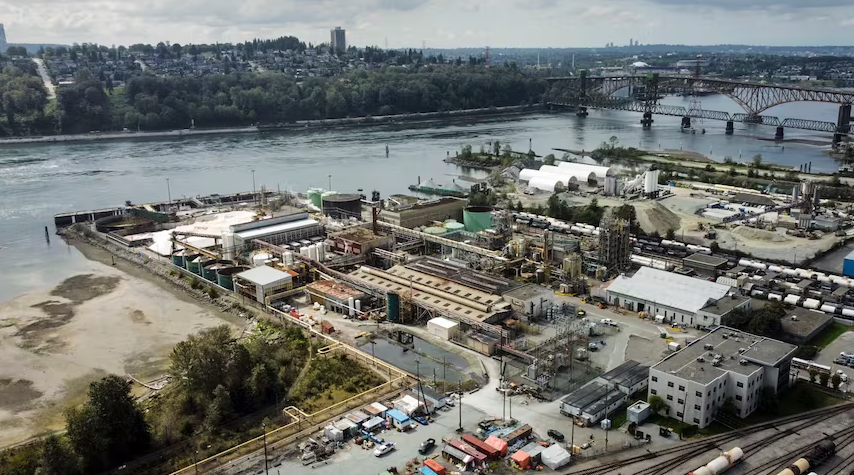
A long-running industrial operation on the North Shore has been dealt a major setback after North Vancouver district council voted against allowing Chemtrade’s chlorine facility to continue operating beyond 2030.
The decision, made in a narrow 4-3 vote, rejects Chemtrade’s proposed rezoning application and leaves the future of one of Canada’s largest liquid chlorine producers in doubt. The company says the outcome could have repercussions far beyond North Vancouver, affecting national chlorine supply and the treatment of drinking water across the country.
Chemtrade, which has operated at the site since 1957, had sought permission to continue manufacturing liquid chlorine at 100 Amherst Ave. past the previously anticipated 2030 closure date. The company framed its proposal as both a modernization effort and a safety improvement, arguing that it would allow for major upgrades to the facility while shifting operations to a lower-risk “produce-and-ship” model.
Instead, the proposal ran into growing political and public resistance, as councillors weighed competing technical reports, questions about rail transport risks, and concerns about keeping hazardous industrial activity in a densely populated urban region.
Chemtrade Warns of Broader Consequences
In a statement issued after the vote, Chemtrade president and CEO Scott Rook said the company was disappointed by council’s decision and warned that the closure of the plant could affect chlorine availability across Canada.
Without production from the North Vancouver facility, he said, the country could become more dependent on foreign suppliers for a chemical that remains essential to water treatment and public health.
Chemtrade says the plant produces more than 40 per cent of Canada’s liquid chlorine supply and employs 118 full-time workers. The company also noted that the site is one of the lowest-carbon chlor-alkali facilities in North America, operating largely on renewable hydroelectric power and self-produced hydrogen.
The company has indicated it will continue trying to extend operations through further engagement with the municipality and senior levels of government. It has also signalled that legal action remains a possibility.
What Chemtrade Proposed
Chemtrade’s application followed earlier plans to shut down operations on land leased from the Vancouver Fraser Port Authority by 2030. In October, however, the company asked the district for an exemption to local rules prohibiting the manufacture of hazardous substances.
Under its proposal, Chemtrade would have been allowed to produce chlorine at the site indefinitely. The company also said it would reduce the amount of chlorine stored on site by converting the operation to a “produce-and-ship” model.
District staff supported the plan, saying it would permit capital upgrades including the removal of on-site chlorine storage tanks and the construction of a new enclosed railcar loading building.
A risk assessment submitted by Chemtrade — and independently peer reviewed on behalf of the district by Risktec Solutions — concluded that the proposal met accepted risk thresholds and would lower overall risk compared with current conditions.
A public information summary included in the district’s consultation package also noted that there had been no significant unintentional chlorine gas releases at the facility since 2010 and no fatalities over the course of its operation.
Public Safety Concerns Shift the Debate
Despite those findings, the application became increasingly controversial after a separate risk report raised alarm about the dangers of transporting liquid chlorine by rail.
That report, prepared by AcuTech and submitted by chlorine industry consultant Michael Graveson, was presented to both North Vancouver and neighbouring Burnaby, which lies less than a kilometre away across Burrard Inlet.
The AcuTech analysis argued that storing and transporting liquid chlorine presents a high-consequence risk to the public, particularly if a railcar derailment or accident were to release chlorine gas. Such a release, the report warned, could pose severe toxic risks and threaten nearby communities.
The report featured prominently at a special Burnaby council meeting, where at least one councillor described its findings as “scary.”
Former Burnaby fire chief Chris Bowcock also spoke to the issue, saying the assessment relied on by North Vancouver did not fully address the risks associated with moving liquid chlorine by railcar. He argued that those transportation hazards needed to be part of the public safety discussion.
The AcuTech report recommended that the plant convert chlorine into bleach before transporting it, rather than shipping liquid chlorine directly.
Questions Over Lobbying Efforts
The controversy surrounding Chemtrade’s proposal was further complicated by the earlier involvement of K2 Pure Solutions, a company that acknowledged participating in a covert online lobbying campaign against Chemtrade in 2024.
K2 Pure later apologized for its role in the campaign, though its CEO defended the broader message that the proposal raised significant safety concerns. At one point, Bowcock said he understood K2 Pure had contracted the AcuTech report, though Graveson later stated that he had retained the firm himself.
K2 Pure’s business model is also relevant to the debate. The company’s website says it offers an alternative to transporting chlorine for water purification and disinfection, a position that aligns with the report’s recommendation to avoid rail shipment of liquid chlorine.
Market and Policy Fallout
The council’s decision was immediately felt in the market, with units in Chemtrade Logistics Income Fund falling more than 18 per cent after the rezoning application was rejected.
The outcome also sets up a broader policy debate about industrial land use, public safety, and essential chemical supply in Metro Vancouver. On one hand, Chemtrade and its supporters argue the facility is strategically important, operationally modern, and safer under the proposed redesign than under the status quo. On the other, opponents say the consequences of a chlorine transport accident are too severe to ignore, especially in a heavily populated region.
The vote suggests that for a majority of councillors, concerns about catastrophic risk ultimately outweighed arguments around national supply, employment, and infrastructure upgrades.
What Comes Next
For now, the rejection means Chemtrade’s path forward remains uncertain.
The company says it will continue discussions with the District of North Vancouver and other governments in an effort to keep the plant open beyond 2030. Whether that effort leads to a revised proposal, an appeal, or court action remains to be seen.
What is clear is that the debate over the plant has moved well beyond a local zoning matter. It now touches on national supply chains, industrial safety standards, municipal authority, and the question of how much risk communities are willing to tolerate in exchange for essential infrastructure.
With the vote now behind it, North Vancouver has made its position known. But the broader fight over the future of chlorine production on the coast may be far from over.
News
Stay updated with the latest BC news stories, subscribe to our newsletter today.
SUBSCRIBE
© 2026 Innovatory Labs Inc. All rights reserved.
LINKS