
No Apology in Proposed $30M Settlement Deepens Anger Among Survivors in Christian Brothers Abuse Case
Lucas Tremblay
5/13/20264 min read
For many of the former students at the centre of a sweeping abuse lawsuit against two Catholic schools in Metro Vancouver, money was never meant to be the full measure of justice.
What many say they wanted most was acknowledgment — a clear, public apology for what they endured and for the institutional failures they believe allowed it to happen.
Instead, a proposed $30-million settlement involving Vancouver College, St. Thomas More Collegiate, and the Roman Catholic Archdiocese of Vancouver has landed with a painful omission: it contains no apology.
That absence has become a flashpoint for survivors who say the schools continue to speak the language of truth, healing and restorative justice while stopping short of the one word that matters most to them — sorry.
‘What Was Their Penance?’
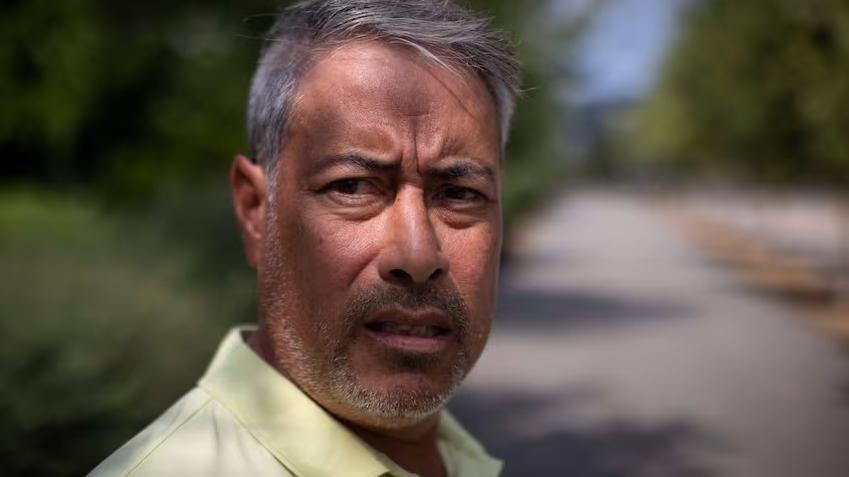
Among those voicing frustration is Colin Wilson, a former student who says the Christian Brothers taught boys at Vancouver College strict lessons about morality and accountability.
Sometimes, he says, that discipline came through corporal punishment — a stick, a strap, or an open-handed blow.
But while children were expected to confess minor wrongs and perform penance, Wilson says the adults running the institution were never held to the same moral standard.
“They walked around like they were the moral authority on life,” he said, “but they let grown men abuse children.”
Wilson is one of more than 200 former students involved in the class-action lawsuit, which alleges they were abused between 1976 and 2013. The claim ties the Vancouver-area schools to a darker and older scandal: the alleged transfer of Christian Brothers from Newfoundland’s notorious Mount Cashel Orphanage after abuse accusations had already emerged there.
For Wilson, the lack of an apology in the proposed settlement is not just disappointing — it feels like a continuation of the same institutional evasion that shaped the past.
“It upsets me that for my entire childhood, I had to go to confession and do penance for the smallest things,” he said. “But what was their penance? So yes — I want an apology.”
A Settlement Rooted in a Much Larger History
The schools at the centre of the case were run by the Christian Brothers, a Roman Catholic lay order that operated schools and orphanages internationally.
The lawsuit traces part of its origins to Mount Cashel Orphanage in St. John’s, Newfoundland, where boys began raising complaints of sexual and physical abuse in December 1975. A later public inquiry found that a cover-up involving the Christian Brothers, police and government officials helped offending brothers leave Newfoundland without charges.
At least six of those brothers later ended up teaching at Vancouver College and St. Thomas More Collegiate in Burnaby. They were eventually charged in the 1990s for offences connected to their time at Mount Cashel.
What was less publicly understood for years, according to the lawsuit, was what allegedly happened after they arrived in British Columbia.
The class action, launched in 2021, alleges that many of the same abusive patterns continued in B.C. after the 1975 cover-up. The case has since become a major reckoning for the schools and for the church institutions tied to them.
Survivors Say Words About Healing Ring Hollow
Both Vancouver College and St. Thomas More Collegiate have posted public updates about the case on their websites, emphasizing trauma-informed reconciliation, truth and restorative justice.
But for some survivors, those phrases ring hollow without an explicit admission of wrongdoing or a direct apology.
Former Vancouver College student Niall Murphy, another member of the class action, says he did not join the lawsuit because he was focused on compensation.
Instead, he says he wanted acknowledgment of the abuse and some meaningful form of accountability from the institutions involved.
“When I joined the class, I said from the start that I wasn’t really interested in money,” Murphy said. “What I wanted was acknowledgment of what happened at the school, accountability, and an apology.”
Murphy waived his right to confidentiality and addressed the court directly during a settlement approval hearing on April 30.
In his remarks, he described being beaten by staff in front of classmates with objects including rulers and hockey sticks. He questioned how the schools and the archdiocese could continue to speak of truth and trauma-informed healing while refusing, in his view, to clearly acknowledge their own responsibility.
He also criticized the language of the proposed settlement, saying it appeared designed to distance the institutions from accountability rather than confront it openly.
School Leaders Say More Must Come Later
The presidents of both schools have said that the proposed settlement, if approved, would not mark the end of the process but the beginning of a new phase.
In statements, leaders from Vancouver College and St. Thomas More Collegiate said further work would follow once the legal issues are resolved. That future work, they say, could include a restorative justice process.
St. Thomas More Collegiate president Stephen Garland went further, saying that in his view, such a process must include a public apology made in the presence of survivors, their families and loved ones.
Garland also said there is no denying that abuse occurred, even if the proposed settlement itself does not include an admission of liability. He said the school cannot meaningfully support survivors if it refuses to acknowledge the painful realities of its own past.
That statement may offer some validation to survivors, but for many, it still falls short of what they want now: not a future possibility of an apology, but one built into the settlement itself.
The Gap Between Legal Resolution and Moral Accountability
The dispute highlights a familiar tension in institutional abuse cases: the difference between legal settlement and moral reckoning.
A negotiated financial settlement may resolve a lawsuit on paper. But for survivors, that does not necessarily amount to truth, responsibility, or healing.
In this case, the proposed agreement may provide compensation, but critics say it leaves the schools and the archdiocese without the burden of directly saying they were wrong.
That distinction matters deeply to those who spent years carrying trauma while institutions remained publicly silent.
What Happens Next
The settlement approval hearing is set to resume on July 6. Ultimately, it will be up to Justice Simon Coval of the Supreme Court of British Columbia to decide whether the proposed agreement is approved.
That decision will shape the legal outcome of the case.
But regardless of what the court decides, survivors have made clear that the larger question remains unresolved: whether institutions that speak of reconciliation are willing to match those words with direct and public accountability.
For many of the former students, the answer cannot be measured only in dollars.
They are still waiting for the apology.
News
Stay updated with the latest BC news stories, subscribe to our newsletter today.
SUBSCRIBE
© 2026 Innovatory Labs Inc. All rights reserved.
LINKS