
Metro Vancouver outside workers begin job action with overtime ban after talks stall
Sarah Desjardins
5/25/20262 min read
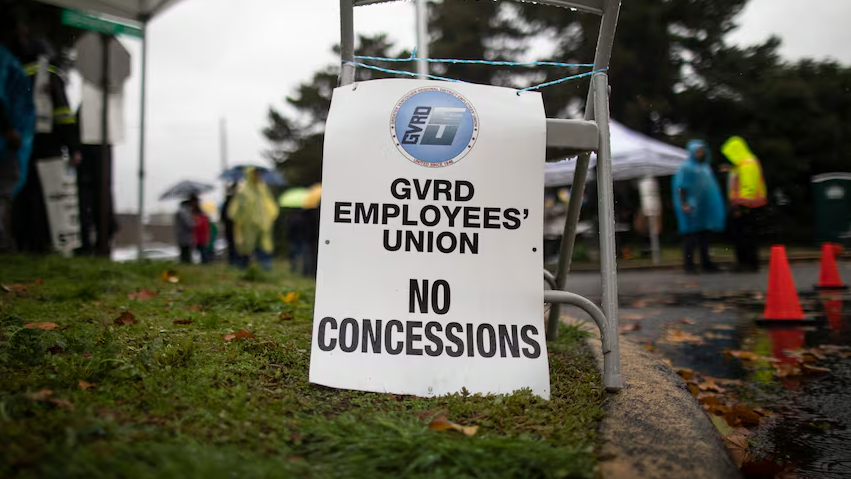
Metro Vancouver’s outside workers have begun job action after contract negotiations with the regional district stalled, with the first step taking the form of an indefinite ban on overtime, standby and acting role work. The union says the restrictions began Sunday afternoon after it moved into a legal strike position following a 72-hour notice.
The job action involves members of the Greater Vancouver Regional District Employees’ Union, which represents about 600 full-time workers and roughly 150 auxiliary or contract workers classified as outside employees. These workers help operate wastewater treatment plants, support water and sewer systems, monitor air quality and carry out infrastructure-related work across the region.
Union says key issues remain unresolved
The union says Metro Vancouver has not adequately addressed concerns around worker safety, protections against contracting out bargaining-unit work, and measures to improve recruitment and retention. Union representatives say members are frustrated that the employer has not returned to meaningful bargaining unless parts of its earlier offer are accepted first.
The union has said the first phase of job action is intended to put pressure on management while limiting immediate disruption to the public. Still, it warns the effects could grow if the dispute continues, especially as summer approaches and infrastructure work intensifies across the region.
Metro Vancouver says essential services will continue
Metro Vancouver says it remains committed to reaching a fair and reasonable agreement and says its current wage offer amounts to more than 10 per cent over three years. The regional district also says the proposal is in line with other recent settlements in the region and with its Teamsters agreement.
Despite the labour action, Metro Vancouver says there will be no disruption to essential services such as drinking water, wastewater treatment and solid waste management.
Dispute follows strong strike mandate
The latest action follows a strong strike vote earlier this year, when union members voted 97.8 per cent in favour of possible job action. The workers’ previous collective agreement expired in December 2024, and the union says the last bargaining session took place on April 13, with no further talks scheduled afterward.
For now, the overtime and standby ban is the opening stage of the dispute. The immediate pressure may fall more heavily on Metro Vancouver operations than on the public, but the union says broader effects could emerge if talks remain stalled and job action escalates.
News
Stay updated with the latest BC news stories, subscribe to our newsletter today.
SUBSCRIBE
© 2026 Innovatory Labs Inc. All rights reserved.
LINKS