
Massive Styrofoam-filled tires wash ashore near Campbell River, alarming B.C. conservationists
Lucas Tremblay
10/29/20252 min read
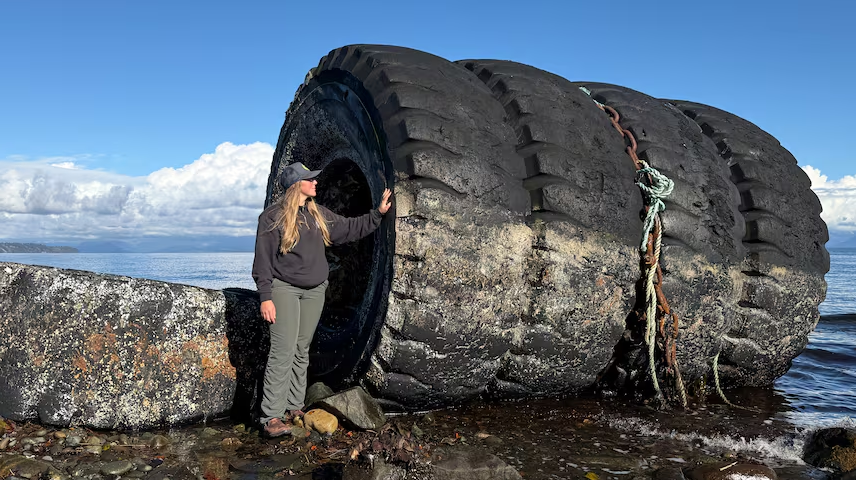
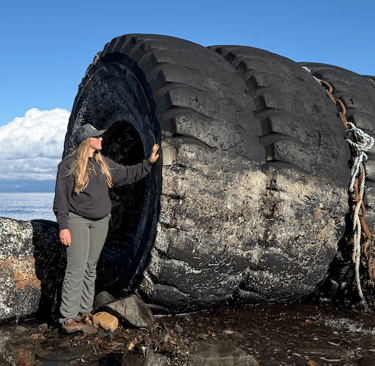
Environmental groups on Vancouver Island are sounding the alarm after 11 massive industrial tires, filled with Styrofoam, washed up on a shoreline near Campbell River.
Each tire weighs about four tonnes, and experts say the combination of foam, rubber, and chemicals poses a serious risk to nearby marine life — especially salmon.
“We suspect they broke away from a dock or barge during one of the big windstorms,” said Keely Dodds, stewardship co-ordinator for Greenways Land Trust, the small non-profit leading the cleanup effort. “We’re not equipped for something this big. Everything we do depends on grants — and this wasn’t in our budget.”
Dodds said the Styrofoam used to keep the tires buoyant is already breaking apart into small fragments, which could be eaten by fish and birds.
“You don’t know if they’re ingesting these plastics and what that means over time,” she said. “It could be really harmful.”
Chemical threat to salmon
Environmental scientist Peter Ross, with the Raincoast Conservation Foundation, warned that beyond plastic pollution, the tires themselves may leach a toxic compound known as 6PPD-quinone — a by-product of tire rubber linked to widespread coho salmon deaths.
“This chemical washes off roads when it rains, and we know it can kill up to 90 per cent of coho in certain streams,” said Ross. “It’s highly toxic to other fish species as well.”
Ross said the incident highlights the need for stronger accountability.
“Someone knows where these tires came from,” he said. “They should be responsible for cleaning them up.”
Difficult cleanup and unclear jurisdiction
Volunteers from Greenways have already hauled away 430 kilograms of soaked Styrofoam, but the tires remain wedged in a remote stretch of shoreline bordered by private property and difficult terrain.
“They’re in a really tricky spot,” Dodds said. “Last time three tires washed up, it took seven months and cost $5,000 just to remove those. This time it’s 11.”
The organization is exploring options such as airlifting the debris by helicopter, but that would be prohibitively expensive.
Meanwhile, the Strathcona Regional District says the foreshore area is under provincial jurisdiction. The B.C. Environment Ministry has confirmed it is aware of the debris and said local efforts are underway to remove it — though no timeline has been set.
A growing coastal problem
Incidents like this are part of a broader trend of marine debris washing up on B.C.’s coast, often tied to industrial equipment or aquaculture operations.
“These tires are just the visible part of a much larger issue,” said Dodds. “Without clear ownership and funding, it’s left to volunteers to protect our shores.”
For now, the giant tires remain lodged in the sand — a reminder, environmentalists say, of how easily industrial waste can turn into a long-term ecological hazard.
News
Stay updated with the latest BC news stories, subscribe to our newsletter today.
SUBSCRIBE
© 2026 Innovatory Labs Inc. All rights reserved.
LINKS