
‘It Feels Endless’: Families Wait Decades for Justice as India’s Courts Buckle Under Historic Backlog
Subhadarshi Tripathy
12/22/20254 min read
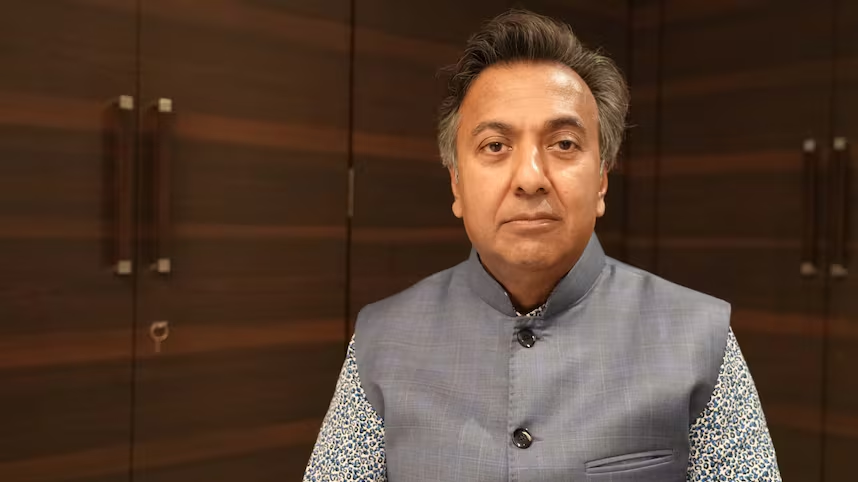
For Sanjay Goel, justice has become a journey measured not in years, but in decades.
Sitting before towering stacks of handwritten court files in Mumbai, the 61-year-old Vancouver resident struggles to describe the emotional toll of navigating India’s criminal justice system. Each visit from Canada brings renewed hope—and familiar disappointment—as hearings are postponed, documents go missing, and arguments are rehearsed yet again.
“It feels like the same day repeating itself over and over,” Goel told Peazzi, describing a process where decisions are revisited and delayed endlessly. “It’s beyond comprehension.”
Goel’s mother, Dr. Asha Goel—a Canadian citizen who lived and worked in Canada for more than 40 years—was brutally beaten and killed in Mumbai in 2003 while visiting family. Prosecutors alleged that two of her brothers ordered the attack. At the outset, the case appeared airtight: a confession from one suspect and DNA evidence with odds of a match estimated at one in 10 billion.
Yet more than 20 years later, no verdict has been delivered.
Goel, his sisters, and his now-elderly father remain trapped in legal limbo after hundreds of hearings. Some witnesses have died. Others are no longer able to testify. The evidence remains, but time has steadily eroded the case’s human foundations.
A System Drowning in Its Own Weight
Their experience is far from unique.
India’s judicial system is grappling with an extraordinary backlog—more than 54 million pending cases, both civil and criminal, according to national judicial data. The number has doubled in just over a decade. More than 5.5 million cases have been stuck in the system for over 10 years, turning justice into a waiting game that outlasts lifetimes.
“There is real desperation,” said Gautam Patel, a recently retired judge of the Bombay High Court. “The backlog has become so monumental that we are effectively in panic mode.”
Experts estimate that at the current pace, clearing India’s court docket would take several hundred years. New cases are filed faster than judges can rule, and systemic reform has lagged far behind the scale of the problem.
The crisis has been building for decades. In 2016, then chief justice of India Tirath Singh Thakur publicly appealed to Prime Minister Narendra Modi, visibly emotional as he warned of an “avalanche” of cases overwhelming the courts. At that time, the backlog stood at roughly 27 million—half of today’s total.
‘Justice Delayed Is Justice Denied’
For activists and defendants, delays are not merely inconvenient—they are life-altering.
Mumbai activist Sudhir Dhawale spent more than six years in jail waiting for bail after being arrested in 2018 under India’s controversial Unlawful Activities Prevention Act (UAPA). Two of those years were spent in solitary confinement.
“In jail, all you do is wait,” Dhawale told Peazzi. “You keep asking yourself, when will this end? And there is no answer.”
His case file spans 25,000 pages and lists more than 350 witnesses. Nearly a year after being released on bail—granted on the grounds that the delay violated his fundamental right to a speedy trial—his case has still not gone to trial.
Such stories underscore a grim reality: prolonged pretrial detention, delayed bail hearings, and procedural inertia have become routine rather than exceptional.
Archaic Procedures, Chronic Shortages
Legal experts point to a justice system still rooted in colonial-era practices. Court proceedings rely heavily on lengthy oral arguments and handwritten witness testimonies that must be painstakingly transcribed. Judges often hear the same legal arguments repeatedly across different cases, compounding inefficiency.
In response, India’s Supreme Court has announced plans to cap oral arguments at 15 minutes beginning in 2026—its first formal attempt to impose time limits. But reform advocates caution that rules alone will not solve the problem without cultural and institutional buy-in.
Compounding the issue is a severe shortage of judges. India has roughly 15 judges per million people, compared with about 65 per million in Canada. Vacancies remain unfilled for months or years, particularly in high courts.
Retired Supreme Court justice Madan Lokur has warned that many cases clogging the system should never reach criminal courts at all. For example, cheque-bouncing—treated as a civil matter in many countries—remains a criminal offence in India, generating hundreds of thousands of cases annually.
“There were points where nearly a thousand such cases were filed every single day in Delhi alone,” Lokur said.
The Economic Cost of Delay
The impact extends far beyond courtrooms. A study by legal think-tank DAKSH estimates that lost wages, missed workdays, and disrupted businesses tied to court attendance cost India nearly 0.5 per cent of its GDP each year.
Some judges are cautiously optimistic about technology’s role in easing the burden. Tools like real-time transcription software and multilingual AI systems are being introduced in select courts, reducing reliance on stenographers and accelerating proceedings. But these innovations remain unevenly distributed and insufficient to address the full scope of the crisis.
A Promise Still Unfulfilled
For Sanjay Goel, policy debates and pilot programs offer little comfort.
He says justice for his mother has not merely been delayed—it has been “buried in bureaucracy.” While his family has the financial means to continue pursuing the case, millions of others simply abandon their claims, worn down by years of waiting.
Goel is particularly pained by the impact on his 88-year-old father, who has lived alone since his wife’s death.
“I promised him I would see this through,” Goel said, his voice breaking. “I’ve done everything expected of me. But it’s exhausting.”
Two decades on, that promise remains unfulfilled—caught in a system where time itself has become the greatest obstacle to justice.
As India’s courts strain under the weight of history, procedure, and volume, families like the Goels continue to wait—hoping that one day, justice will move faster than memory fades.
News
Stay updated with the latest BC news stories, subscribe to our newsletter today.
SUBSCRIBE
© 2026 Innovatory Labs Inc. All rights reserved.
LINKS