
Interior Communities Urge Province to Reform B.C.’s Heritage Conservation Act Amid Rebuild Delays
Lucas Tremblay
2/25/20263 min read

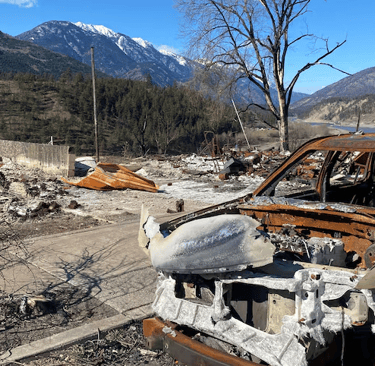
Nearly five years after wildfire destroyed much of Lytton, B.C., local leaders say rebuilding remains complicated — and costly — in part due to requirements under the province’s Heritage Conservation Act (HCA).
Mayor Denise O’Connor says archaeological assessments mandated under the act have added financial strain and delays for residents trying to rebuild their homes.
O’Connor said she was required to hire an archaeologist to develop a site plan before reconstructing her own house — an expense that cost roughly $20,000. While the village created a grant program to help offset some of the burden, she said many homeowners were still left covering significant out-of-pocket costs.
“That sort of money is a concern,” O’Connor said. “We’re providing grants for people rebuilding, but as we look to develop and welcome new residents, it becomes a real barrier.”
How the act works
The Heritage Conservation Act is designed to protect archaeological sites and heritage property across British Columbia.
Under the legislation, if a property owner or contractor discovers material of archaeological or cultural significance, they must immediately halt work and notify the province’s Archaeology Branch. Any required archaeological assessments must be paid for by the property owner.
Municipal leaders argue that while heritage protection is important, the process lacks clarity around timelines and cost-sharing — particularly in communities attempting to recover from disaster.
O’Connor says she would like to see clearer timeframes for decisions and financial assistance for those required to pay for archaeological and legal services.
More broadly, she says local governments should be formally included in discussions when archaeological findings affect development.
“In Lytton, we were never formally spoken to or had discussions with the province,” she said. “It’s about having those conversations with local representatives.”
Growing calls for reform
The issue is gaining traction across the Interior.
Earlier this month, Kamloops city council approved a resolution asking the province to ensure local governments are formally included in discussions about reforming the Heritage Conservation Act, as well as its relationship to the Declaration on the Rights of Indigenous Peoples Act (DRIPA) and reconciliation policy.
The resolution will be submitted to the Southern Interior Local Government Association for broader consideration.
Debate around the act intensified after a Kamloops property owner uncovered human remains while preparing a community garden — prompting renewed public discussion about the responsibilities and implications tied to archaeological discoveries on private land.
Indigenous perspectives
First Nations leaders have also long called for changes to the act.
Tḱemlúps te Secwépemc Chief Rosanne Casimir said recent events present an opportunity to reassess how Indigenous heritage sites are protected, particularly on private property.
She said meaningful reform must incorporate Indigenous perspectives, ethical responsibilities and cultural values as part of respectful coexistence.
“This recent discovery has offered yet another opportunity to reassess the current regulatory approach,” Casimir said in a statement.
Province says consultations underway
The provincial government had initially indicated changes to the act could be introduced this spring, but Forests Minister Ravi Parmar has since said additional consultation is required before meaningful reform can proceed.
In a recent statement to Peazzi, Parmar acknowledged that modernization is needed.
He said local governments have been engaged in discussions since 2022, with 364 municipal representatives participating in various consultation sessions over the past four years.
“The province continues to be open to one-to-one conversations with and receiving written submissions from local governments,” Parmar said, noting additional engagement sessions are planned in the coming weeks.
Balancing protection and development
At its core, the debate reflects a broader challenge: balancing the protection of Indigenous heritage and archaeological sites with the practical realities of housing, rebuilding and economic development.
For communities like Lytton — still working to recover from catastrophic wildfire — leaders say that balance must include clearer processes, predictable timelines and shared financial responsibility.
Until legislative changes are finalized, residents rebuilding in heritage-sensitive areas remain subject to the existing framework — and the costs that come with it.
News
Stay updated with the latest BC news stories, subscribe to our newsletter today.
SUBSCRIBE
© 2026 Innovatory Labs Inc. All rights reserved.
LINKS