
Independent MLA pushes bill to make it easier for voters to recall elected officials
Olivia Singh
12/29/20253 min read

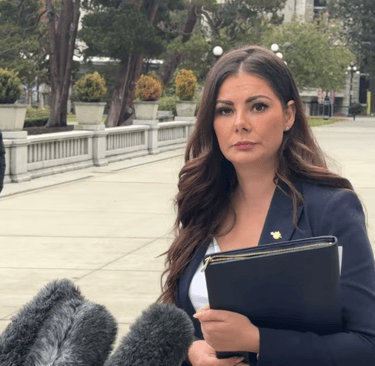
An Independent MLA is calling for major changes to British Columbia’s recall rules, arguing voters should have a stronger say if they lose confidence in their elected representative before the next election.
Amelia Boultbee, the MLA for Penticton–Summerland, has introduced a private member’s bill that would make it easier to launch and succeed in a recall campaign against an MLA.
Boultbee says public frustration with political accountability has been building for years.
“Once a politician is elected, there’s very little voters can do if they’re unhappy with that person’s performance until the next election,” she said. “This bill is about giving people a meaningful mechanism to respond if an MLA has lost their mandate.”
Under the proposed changes, a recall campaign could begin 12 months after an election, rather than the current 18-month waiting period. Boultbee likens that timeline to a performance review.
“In most workplaces, you get a review after a year. A recall is essentially a performance review carried out by voters,” she said.
The bill would also significantly lower the number of signatures required for a successful recall. Instead of needing signatures from 40 per cent of eligible voters in a riding, a recall petition would only need to match the number of votes the MLA received in the previous election — a threshold that, in many ridings, would be thousands fewer signatures.
Boultbee argues the change strikes a balance.
“You don’t want angry mobs running politicians out of office every time there’s controversy,” she said. “But if an MLA has truly lost the support that put them in office, voters should have a realistic way to act.”
Not aimed at OneBC, Boultbee says
Boultbee insists the bill is not targeted at the political turmoil surrounding OneBC, a party formed by former B.C. Conservative MLAs Dallas Brodie and Tara Armstrong.
Brodie, now an Independent MLA for Vancouver–Quilchena, is facing the early stages of a recall effort after leaving the B.C. Conservatives and helping to form OneBC. Since then, Brodie and Armstrong have promoted positions that critics say were not part of the platform voters originally supported.
The situation has added fuel to the recall debate. Premier David Eby has said he supports the idea of recall in cases where MLAs abandon the views they ran on, though he has not explicitly endorsed lowering the threshold.
Some recall advocates argue Brodie’s case illustrates why reform is needed. Steve Sxwithul’tsxw, who leads the Indigenous Accountability Coalition, has helped organize awareness efforts around the recall campaign, saying Brodie’s views are deeply offensive to Indigenous communities.
“If you break away from the platform people voted for, there should be consequences,” he said. “At the very least, voters should have a real opportunity to decide.”
Brodie, for her part, says she supports the principle of recall reform, even if it applies to her.
“Citizens should have a stronger role in the political system when they don’t like what they see from elected officials,” she said. “Lowering the threshold would affect many MLAs, not just me.”
A high bar to clear
British Columbia’s recall legislation has been in place for roughly 30 years, and no MLA has ever been successfully recalled. The closest case came in 1998, when Liberal MLA Paul Reitsma resigned before a recall campaign against him could conclude.
Supporters of reform say that history proves the current system is too restrictive. Critics counter that lowering the threshold could lead to constant recall attempts driven by political anger rather than serious misconduct.
Boultbee acknowledges the concern but says accountability must outweigh the risk.
“How else do you keep MLAs in check between elections?” she asked. “If voters no longer believe someone represents them, they should have a fair and realistic way to say so.”
Whether the bill gains traction remains uncertain, but it has reignited debate at the legislature over how much power voters should have once ballots are counted — and how easy it should be to take that power back.
News
Stay updated with the latest BC news stories, subscribe to our newsletter today.
SUBSCRIBE
© 2026 Innovatory Labs Inc. All rights reserved.
LINKS