
Families and Teachers Push Back as Nelson-Area Schools Restructure Indigenous Education Supports
Emma MacLeod
5/20/20264 min read

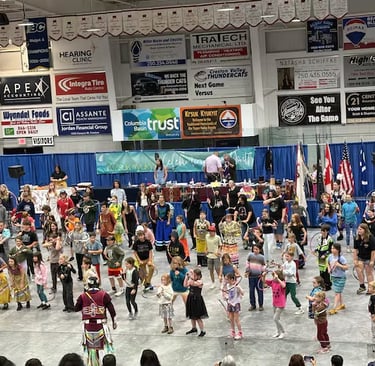
A growing dispute over Indigenous education is unfolding in British Columbia’s Kootenay region, where families, teachers and school staff say planned changes in School District 8 could weaken the very support systems Indigenous students have come to rely on.
Beginning in September, elementary schools and one middle school in School District 8 will no longer have dedicated Aboriginal academic success support teachers. In their place, the district says it will expand the use of Indigenous support workers as part of a new approach focused on student connection, family engagement, and belonging.
District leaders describe the change as an improvement. But many parents and educators say it risks removing trusted adults from schools and replacing a deeply rooted model with one that may not provide the same academic, cultural, or community support.
A Shift in the Model
Under the current structure, Aboriginal academic success support teachers play formal teaching roles tied to instruction, assessment, and academic programming. They often work across cultural learning and classroom support while also building close relationships with students and families.
The district’s revised model would shift that work in elementary schools and one middle school toward Indigenous support workers, whose roles are intended to focus more on relationship-based support. That includes family communication, belonging, identity, cultural safety, and cultural learning.
District officials say the goal is not to reduce support, but to reorient it.
Still, for many families, the difference between a teacher and a support worker is not a small administrative detail. They see it as a fundamental change in what students will be able to access once the new school year begins.
Families Fear a Loss of Trust and Continuity
For Nelson parent Skye-Lea Farr, the issue is deeply personal.
Farr says one of her biggest concerns is that students could lose years of trust, respect and community connection built through the current model.
She worries that once those relationships are disrupted, they may be impossible to quickly rebuild.
Her nine-year-old daughter has been part of the Indigenous education program since kindergarten, and Farr says that experience has created a safe and welcoming place shaped by cultural programming, land-based learning, school-based support, and close family connection.
To her, that environment is not easily replaced by a district-wide structural change.
She has launched an online petition opposing the move, and it has already drawn hundreds of signatures from people concerned about the impact on students and schools.
Educators Say Teacher Roles Cannot Simply Be Replaced
At a recent and reportedly heated school board meeting, parents, teachers and union representatives urged the district to reconsider the decision.
Middle school teacher Sharon Inkpen read a letter on behalf of staff opposing the change, arguing that the work of the current Aboriginal academic success support teacher has been shaped over years of local trust-building and cannot be replicated through a more generalized model.
That concern is echoed by other educators in the district, who say Indigenous teachers do more than provide emotional support or family outreach.
They lead instruction, coordinate cultural programming, bring students to events, support curriculum delivery, and help create lasting connections between schools, families, and local Indigenous communities.
Farr said that under the current model, Indigenous teachers are able to independently organize activities in and outside the classroom in ways support workers cannot. She pointed to examples such as taking students to powwows, helping make regalia, leading marches, and teaching traditional skills that many children might not otherwise encounter in school.
For critics of the district’s plan, that teacher-led component is central — not optional.
Concerns Over What Students Stand to Lose
Carla Wilson, president of the Nelson District Teachers’ Association, says the roles of Indigenous teachers and Indigenous support workers are distinct and should not be treated as interchangeable.
In her view, students could lose access to curriculum-based support, teacher-led cultural learning, and the broader educational leadership those teachers provide inside schools.
She also raised concerns about implementation, saying the district may face staffing gaps if it cannot recruit enough qualified Indigenous support workers before September.
That adds another layer of uncertainty to an already tense transition.
For opponents of the change, the issue is not simply whether some form of support remains in place. It is whether the district is removing experienced, trusted teachers without a clear plan to preserve the depth and quality of what they currently offer.
District Says More Support, Not Less
District officials reject the idea that students are being left with less.
Laury Carrière, the district’s director of instruction for Indigenous education and learning services, said every secondary school will continue to have Aboriginal academic success teachers. But at the elementary and middle-school level, she said, the focus is shifting.
According to Carrière, Indigenous support workers are meant to increase adult presence in schools and strengthen relationships with families and communities. She says families will notice more support in classrooms, more connection with school staff, and a stronger emphasis on identity, belonging, and cultural safety.
From the district’s perspective, the change is designed to enhance the student experience rather than reduce services.
Jared Basil, a member of the Indigenous Education Council, has also defended the plan, describing it as an improvement and part of a broader move toward Indigenous self-determination in education.
That framing suggests the district sees the restructuring not only as an operational decision, but as part of a wider effort to rethink how Indigenous education is delivered.
A District Under Pressure
The dispute has exposed broader tensions across School District 8, which serves approximately 4,700 students across six municipalities and more than 15 rural communities spread over a large geographic area.
In a district of that size, changes to specialized roles can ripple far beyond a single school.
Critics say the decision was made too abruptly and with too little consultation. Farr says teachers were informed that the positions would no longer exist, rather than being meaningfully involved in shaping the change.
District officials say they are still developing an engagement pathway with students, families and communities, and that the model could be reviewed later if it does not work as intended.
But for many families and educators, that assurance does little to calm fears about what could be lost in the meantime.
A Debate About More Than Staffing
At its core, the conflict is about more than titles or staffing structures. It is about who Indigenous students trust, how culture is carried into schools, and what kind of support truly helps students feel seen, safe and connected.
Supporters of the change say the new model could bring more adults into schools and create stronger family ties.
Opponents say the district is underestimating the role Indigenous teachers already play — and overestimating how easily that work can be transferred.
As September approaches, families and educators are making clear that they do not see this as a routine organizational update. To them, it is a decision that could reshape Indigenous education in the district for years to come.
News
Stay updated with the latest BC news stories, subscribe to our newsletter today.
SUBSCRIBE
© 2026 Innovatory Labs Inc. All rights reserved.
LINKS