
False Claims About Trans Community Spread Online Following Tumbler Ridge Shooting
Lucas Tremblay
2/12/20262 min read
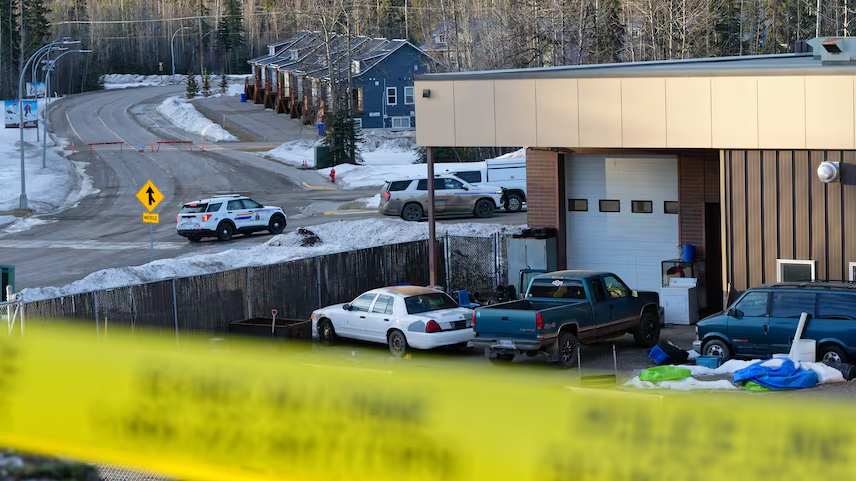
In the wake of the mass shooting in Tumbler Ridge, B.C., misinformation about transgender people spread rapidly across social media — even before authorities had confirmed details about the suspect.
The shooting left nine victims dead, along with the suspect, and dozens injured. As news unfolded, online speculation began circulating about the suspect’s gender identity. Within hours, some commentators and public figures were making broad claims linking transgender people to mass violence.
Trans advocate Marni Panas, based in Edmonton, said she was heartbroken by the tragedy — and dismayed by the rhetoric that followed.
“Our attention should be on caring for the victims and supporting the community,” Panas said. “Instead, we’re seeing people use this moment to advance hate.”
Police later identified the suspect as 18-year-old Jesse Van Rootselaar. At a press conference, RCMP Deputy Commissioner Dwayne McDonald said the suspect had been assigned male at birth and had publicly identified as female after beginning a gender transition several years ago.
But long before official confirmation, online posts were already framing the shooting as evidence of a broader trend. Some commentators described what they called an “epidemic” of violence involving transgender individuals.
No evidence of an “epidemic,” researchers say
Experts who track mass violence say the data does not support those claims.
James Densley, co-founder of The Violence Prevention Project and a criminology professor at Metro State University in Minnesota, says statistics show that mass shootings are overwhelmingly carried out by cisgender men — meaning individuals whose gender identity aligns with the sex assigned to them at birth.
In the U.S. database his project maintains, approximately 97.5 per cent of mass shootings were committed by cisgender men. Around two per cent were committed by women, and roughly 0.5 per cent involved individuals identified as transgender.
“Transgender people are statistically underrepresented in mass shooting data,” Densley said. “The idea of an epidemic is simply not supported by the numbers.”
He said a cognitive bias known as “base rate neglect” may contribute to misperceptions. When a perpetrator belongs to a group that is already the focus of political or cultural debate, that characteristic can receive disproportionate attention.
“When a shooter is male, that’s rarely emphasized because it’s statistically typical,” Densley explained. “But when a shooter is part of a group that people view as unusual, that becomes the defining narrative.”
Impact on communities
Advocates say the online backlash is compounding grief within the broader community.
Amelia Newbert, co-executive director of Calgary-based 2SLGBTQ+ advocacy organization Skipping Stone, said it has been difficult to shift focus from mourning the tragedy to countering harmful narratives.
“This should be a time to come together, grieve, and support families,” Newbert said. “Using a tragedy to push political or ideological positions only causes further harm.”
Densley noted that history offers examples of marginalized groups being broadly associated with violence based on isolated incidents.
“In moments of crisis, there can be a tendency to generalize,” he said. “But that speaks more to the politics of the moment than to any causal relationship.”
For Panas, the experience has left her feeling both sorrowful and uneasy.
“We feel the same grief as everyone else,” she said. “The tragedy affects us as Canadians, as parents, as human beings.”
Community leaders continue to emphasize that support for victims and affected families should remain the central focus as investigations into the shooting continue.
News
Stay updated with the latest BC news stories, subscribe to our newsletter today.
SUBSCRIBE
© 2026 Innovatory Labs Inc. All rights reserved.
LINKS