
Cranbrook Turns to Drones to Monitor Former Encampment Sites as City Shifts to Proactive Public Safety Model
Subhadarshi Tripathy
1/5/20263 min read

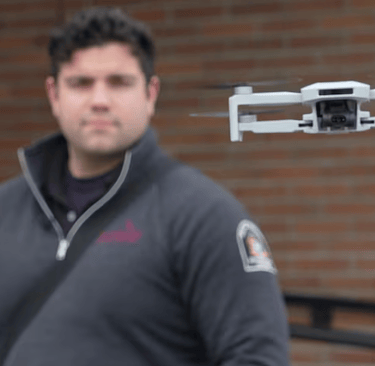
The City of Cranbrook has launched a new public safety initiative that includes the use of drones to monitor former homeless encampment sites and nearby wooded areas, marking a significant shift in how the East Kootenay community responds to homelessness-related safety concerns.
City leaders say the program is not about tracking unhoused people themselves, but about preventing dangerous situations before they escalate. The drone deployments are part of a broader strategy that also includes closer coordination between bylaw officers and the Royal Canadian Mounted Police, as well as expanded bike patrols in public spaces.
“If we just turned a blind eye, it would be complete chaos,” Mayor Wayne Price told Peazzi, describing a city grappling with safety challenges he says are disproportionate for a community of Cranbrook’s size.
A Shift From Reaction to Prevention
According to city officials, past responses to encampments were largely reactive. Enforcement typically followed complaints from residents or businesses, with different departments responding independently depending on the issue—police for criminal concerns, fire services for hazards, or health authorities for medical emergencies.
“It was one-off,” Price said. “You’d deal with one complaint, one individual, one problem at a time.”
That approach, he added, resulted in fragmented responses and limited situational awareness.
“Resources were stepping over each other,” he said. “One group didn’t know what the other was doing. It was crisis management.”
The new strategy aims to close those gaps by improving coordination and visibility across departments, allowing officials to assess risks before sending responders into potentially dangerous environments.
Fire Hazards and Safety Risks
Bylaw enforcement officer Kyle Trenholm said the city’s concerns are rooted in repeated incidents at encampments over the years.
“Before we even talked about drones, we’d had encampments burn down,” Trenholm said. “We’ve had propane tanks explode. We’ve had people injured.”
Trenholm said drones, first deployed in June, provide real-time aerial views of areas that can be unsafe or difficult to access on foot. They are typically used before officers or city staff attend a site in person, especially when complaints mention fire hazards or flammable materials.
“The drone lets us see how many people are there, what kind of structures exist, whether they’re stable, and if there are hazards like propane or open fires,” he explained.
That information helps determine whether it is safe to proceed on foot, what protective equipment may be needed, and how close responders should approach.
“It’s about knowing what we’re getting into before we go in,” Trenholm said.
Police and Bylaw Collaboration
RCMP detachment commander Barry Graham said integrating bylaw officers into daily operations has strengthened communication and improved response planning.
“Traditionally, we didn’t overlap much,” Graham said. “But as circumstances in the community evolved, so did our partnership.”
City officials say the enhanced collaboration allows for quicker response times and a more consistent presence in areas where safety concerns have repeatedly surfaced.
Privacy and Human Rights Concerns
Not everyone is reassured by the increased use of surveillance technology.
Dawna Chamberlain, a Cranbrook resident who accesses mental health and addiction support services, said the drones heighten feelings of being watched rather than protected.
“I don’t feel safe,” she said. “We have drones following us. We have to watch our every move.”
Chamberlain also questioned who is funding the program and whether surveillance alone can meaningfully address homelessness.
Privacy advocates echo those concerns. Michael Harvey, British Columbia’s privacy commissioner, has warned that public bodies must be legally authorized to collect personal information and should carefully assess whether surveillance tools are actually effective.
“‘Let’s just put in more surveillance’ can become a reflex rather than a real solution,” Harvey said. “Public bodies need to evaluate whether these programs are truly achieving their intended goals.”
Balancing Enforcement and Compassion
Mayor Price acknowledged that the issues facing Cranbrook are complex and extend far beyond municipal authority.
“There could be a mental health challenge, a drug challenge, or a housing challenge,” he said. “These are deeply rooted problems, and they require everyone working together.”
City officials emphasize that the drone program is not intended as a quick fix, but as part of a long-term shift toward a more proactive and coordinated public safety model.
They say residents should begin to notice clearer communication, increased patrol visibility, and stronger engagement with neighbourhoods and businesses as the approach matures.
“The goal isn’t to eliminate these pressures overnight,” Price said. “It’s to move away from fragmentation and toward a system that balances compassion with accountability.”
As Cranbrook experiments with new tools and strategies, the debate highlights a broader question facing many small communities across British Columbia: how to respond to visible social challenges in ways that improve safety without deepening mistrust or overlooking the underlying causes.
News
Stay updated with the latest BC news stories, subscribe to our newsletter today.
SUBSCRIBE
© 2026 Innovatory Labs Inc. All rights reserved.
LINKS