
Can New Height Detection Technology Prevent Overpass Strikes in B.C.? Pilot Project Launches in Abbotsford
Olivia Singh
3/17/20263 min read
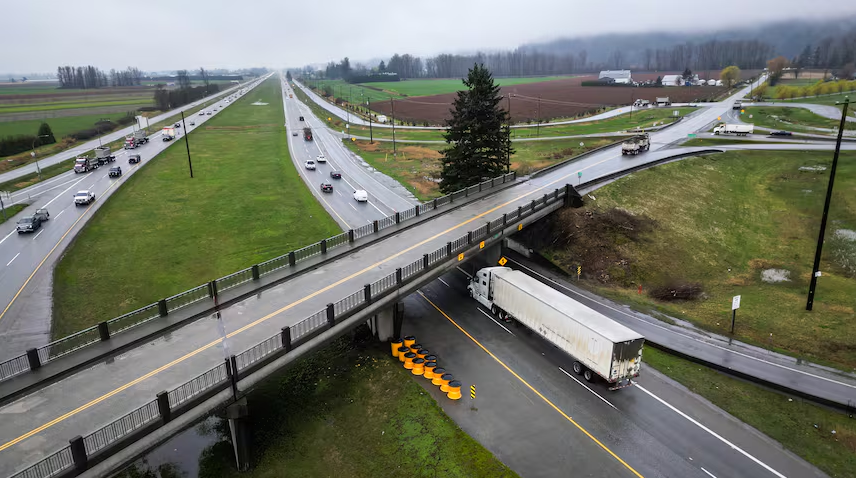
A new high-tech safety system is being deployed along one of British Columbia’s busiest highways in an effort to tackle a persistent and costly problem: over-height trucks colliding with overpasses.
The pilot project, located on Highway 1 near the No. 3 Road overpass in Abbotsford, uses a combination of infrared laser beams, radar, ground sensors, cameras, and flashing warning beacons to detect vehicles that exceed safe height limits before they reach critical infrastructure.
Transportation officials say the goal is simple—stop strikes before they happen.
“Our hope is that this system will significantly reduce, or potentially eliminate, these types of incidents,” said Janelle Staite, executive director with the BC Ministry of Transportation.
A Persistent Infrastructure Problem
Overpass strikes have become a recurring issue across British Columbia, with dozens of incidents reported over the past five years. These collisions can cause significant structural damage, disrupt traffic for hours or days, and result in costly repairs.
The No. 3 Road overpass has been identified as a particularly vulnerable location. Since 2021, it has been struck six times by commercial vehicles, making it a prime candidate for testing new prevention measures.
“We want to observe this over time,” Staite said. “How often are we detecting over-height vehicles? And what impact does this have on reducing strikes?”
How the System Works
The detection system operates through a layered approach designed to minimize false alarms while maximizing accuracy.
Infrared laser beams are projected across the highway at two separate stations, each aligned to the height of the overpass. These stations are positioned roughly 50 metres apart and work in tandem with in-ground sensors that detect passing vehicles.
If a vehicle is too tall, it will break the laser beam at both stations—confirming that the obstruction is real and not caused by environmental factors such as birds, fog, or loose tarps.
Once both triggers are activated, warning beacons begin flashing immediately, alerting the driver to pull over.
Drivers are then directed to a designated pullout area, where they must call for assistance to adjust their load before continuing.
“This system requires confirmation at two points, which makes it much more reliable than earlier approaches,” Staite said. “It reduces the chance of false activations and ensures that warnings are taken seriously.”
Industry Reaction: A Step Forward, But Not a Cure
The trucking industry has welcomed the initiative, but emphasizes that technology alone cannot solve the issue.
Dave Earle, president and CEO of the BC Trucking Association, said the system is a positive step—but also a reflection of ongoing challenges within the industry.
“It’s good because it will help prevent these hits,” Earle said. “But it’s also disappointing that we need systems like this in the first place.”
He stressed that responsibility ultimately lies with drivers and carriers to ensure their loads comply with height restrictions before entering highways.
Signs of Improvement
Recent data suggests that overpass strikes may already be trending downward.
According to provincial figures, infrastructure collisions dropped from 29 incidents in 2024 to 17 in 2025. Authorities have also increased enforcement, issuing more than $66,000 in violation tickets to drivers and carriers since 2021.
Earle attributes part of the improvement to increased awareness and education efforts within the industry.
“There was a period where people just weren’t paying attention,” he said. “We’ve been pushing hard on training and awareness to change that mindset.”
Looking Ahead
Construction of the new detection system is expected to be completed in April, with full operation targeted for June. Officials say the pilot will be monitored over several years to evaluate its effectiveness before considering broader deployment across the province.
If successful, the technology could mark a significant shift in how British Columbia protects its transportation infrastructure—moving from reactive repairs to proactive prevention.
For now, the province is betting that a combination of technology, enforcement, and education can finally curb a problem that has long frustrated both officials and drivers alike.
News
Stay updated with the latest BC news stories, subscribe to our newsletter today.
SUBSCRIBE
© 2026 Innovatory Labs Inc. All rights reserved.
LINKS