
B.C. Judge Dismisses Defamation Suit Against Union of B.C. Indian Chiefs Over Letter Criticizing Book Distribution
Emma MacLeod
5/5/20263 min read
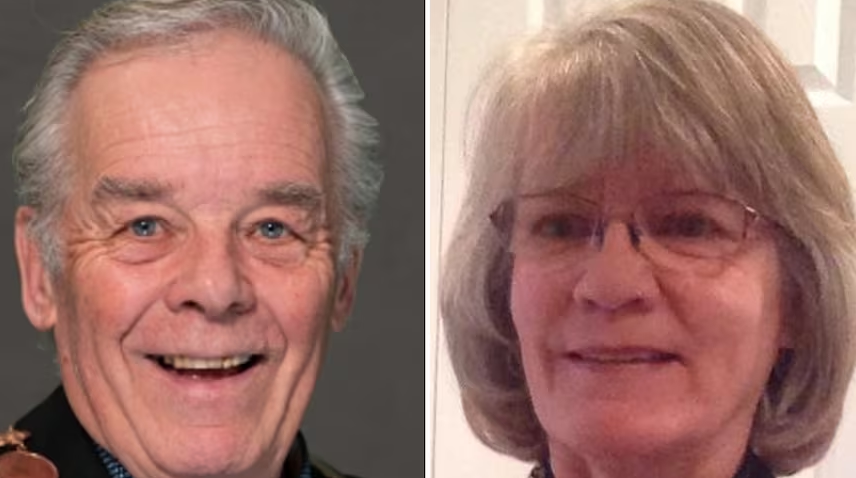
The British Columbia Supreme Court has dismissed a defamation lawsuit filed by Pat Morton, the wife of Quesnel Mayor Ron Paull, against the Union of B.C. Indian Chiefs (UBCIC), in a ruling that underscores the strong legal protection afforded to public criticism on matters of significant public interest.
The case arose after the Union of B.C. Indian Chiefs sent a letter to Quesnel city council in April 2024 objecting to an invitation extended to author Frances Widdowson, who had been scheduled to address council about a book questioning widely documented abuses in Canada’s residential school system.
Morton sued after the union’s letter accused her of purchasing cases of the book and distributing them to clients at her son’s tax office, where she worked, despite what the union described as the harmful impact such actions could have on residential school survivors and their families.
At the centre of the legal dispute was whether the union’s statements crossed the line into libel — or whether they were protected speech in the context of a public debate involving reconciliation, historical trauma, and freedom of expression.
Court Says Criticism Was Protected
In dismissing the lawsuit, Justice Jasmin Ahmad found that the statements challenged by Morton were protected under British Columbia’s Protection of Public Participation Act, legislation designed to prevent lawsuits from being used to silence or intimidate people speaking out on issues of public importance.
The judge concluded that the allegedly defamatory statements constituted fair comment on a matter of public interest and therefore deserved a high degree of legal protection.
The court also found that Morton had suffered little, if any, meaningful harm as a result of the letter.
In her ruling, Ahmad made clear that the case was not about whether Morton had the right to distribute the book, nor about whether she was entitled to hold or express her views about its contents.
Instead, the judge said the key legal question was whether the public interest in protecting the union’s right to criticize Morton’s actions outweighed whatever reputational harm she may have experienced.
The court found that it did.
Controversy Over Residential School Book
The dispute stemmed from the book Grave Error: How The Media Misled Us (and the Truth about Residential Schools), a publication that challenges accepted accounts of atrocities committed in Canada’s residential school system.
The Union of B.C. Indian Chiefs described the book as “extremely dangerous,” arguing that it disregarded the lived experiences of residential school survivors, including accounts of sexual abuse, medical experimentation, death, and the burial of some children in unmarked graves.
Its letter to Quesnel council objected not only to Widdowson’s proposed appearance, but also to Morton’s role in circulating the book locally.
That criticism formed the basis of Morton’s lawsuit.
A Broader Debate Over Speech and Harm
The case unfolded against a broader national reckoning over residential schools, unmarked graves, and the legacy of colonial violence in Canada.
It also intersected with ongoing debates over the boundaries of free expression — particularly when public statements challenge or deny deeply painful historical experiences.
By dismissing the claim under anti-SLAPP legislation, the court effectively found that the union’s right to speak publicly and critically on the issue carried greater weight than Morton’s claim of reputational harm.
The ruling reinforces the principle that public debate, especially on issues involving Indigenous rights, historical injustice, and reconciliation, must be given substantial room to unfold — even when the language used is sharp, condemnatory, or uncomfortable.
Widdowson Remains a Polarizing Figure
Frances Widdowson, one of the contributors to the book, has remained a deeply controversial figure in Canadian public life.
She has continued to appear on university campuses and other public platforms to promote her views about residential schools and Indigenous policy. Earlier this year, she was physically removed by RCMP officers from an event at the University of British Columbia following significant protest.
That broader controversy formed part of the backdrop to the Quesnel dispute, which became about more than a single letter or a local council invitation. It also reflected a wider struggle over who gets to shape public narratives about Canada’s residential school history — and how institutions should respond when those narratives are challenged.
A Significant Free-Expression Ruling
For the Union of B.C. Indian Chiefs, the ruling represents a legal affirmation of its right to speak forcefully in defence of survivors and to condemn conduct it views as harmful.
For Morton, it marks the end of a legal effort to have the union’s remarks treated as defamatory.
More broadly, the decision stands as a reminder that courts are often reluctant to allow defamation suits to proceed when the underlying speech concerns a matter of major public significance and falls within the bounds of protected opinion.
In this case, the court found that threshold was clearly met.
The result is a ruling that not only dismisses the lawsuit, but also reinforces the legal protection surrounding public criticism in one of the most sensitive and consequential debates in Canadian public life.
News
Stay updated with the latest BC news stories, subscribe to our newsletter today.
SUBSCRIBE
© 2026 Innovatory Labs Inc. All rights reserved.
LINKS