
B.C. grape growers struggle to sell harvest as wineries import U.S. fruit under provincial program
Sarah Desjardins
10/31/20252 min read
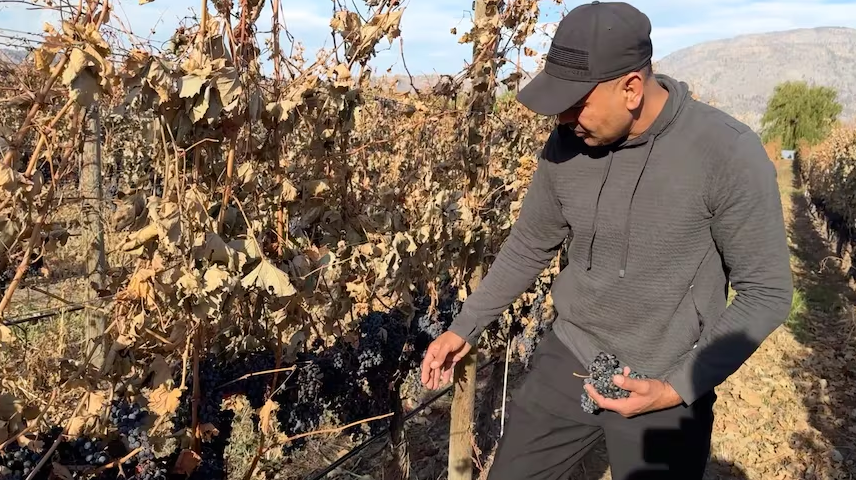
In the heart of B.C.’s wine country, some Okanagan grape growers are facing a painful new problem: a bumper crop with nowhere to go.
After two years of severe frost damage and poor harvests, this year’s strong yields were expected to bring relief. Instead, farmers like Amarjeet Gill, who runs a vineyard near Osoyoos, say they’re stuck with tonnes of ripe grapes still hanging on the vines.
“I talk to almost 50 wineries. I call every day,” Gill said. “So many people say, ‘No, I’m stuck too.’ I’m scared — how do I pay the bank? The pressure is too much.”
Gill estimates he still has nearly 100 tonnes of unsold Merlot and Cabernet Franc grapes despite good quality and sugar levels. He blames the province’s vintage replacement program, which allows B.C. wineries to import grapes and juice from the United States to make up for losses caused by the 2024 cold snap.
Program under scrutiny
The B.C. government introduced the import program last year after frigid winter temperatures devastated vineyards, wiping out the local grape crop. It was extended again in 2025, with officials citing an ongoing shortage of about 10,000 tonnes of grapes.
But many growers argue the emergency measure has outlived its purpose — giving wineries little incentive to buy local fruit now that supply has recovered.
Winery owner Jesse Gill, who operates Back Door Winery in Summerland (no relation to Amarjeet), said he’s hearing the same frustration across the valley.
“I don’t think any oversight was done,” he said. “The province granted the exemption — and now growers can’t move their fruit.”
In response, Gill has launched a “Save the Grapes” campaign, opening up 100,000 litres of extra tank space at his winery to take in unsold grapes from nearby farmers.
Industry divided
Not everyone agrees the import program is to blame. Jeff Guignard, CEO of Wine Growers B.C., says market dynamics — not government policy — are the real issue.
“The program was only extended in late September, and you can’t grow your business while you’re in it — you can only replace what you lost,” Guignard explained. “Government and industry have done everything possible to encourage wineries to buy B.C. grapes first.”
He also pointed to an online marketplace set up by the industry to help connect growers with wineries.
Province says program ending soon
Agriculture Minister Lana Popham declined an interview but said in a statement that the decision to extend the program came at the request of the wine industry, which was still reporting supply shortages earlier this year.
Popham confirmed, however, that the program will not continue past 2025, signaling that B.C. wineries will once again be required to source domestic fruit moving forward.
For growers like Amarjeet Gill, the news is little comfort as he watches his unsold grapes wither on the vines.
“We survived the cold,” he said. “Now it’s the policy that’s killing us.”
News
Stay updated with the latest BC news stories, subscribe to our newsletter today.
SUBSCRIBE
© 2026 Innovatory Labs Inc. All rights reserved.
LINKS