
B.C. Development Group Cancels Awards, Citing Worst Housing Market in Decades
Emma MacLeod
6/22/20262 min read
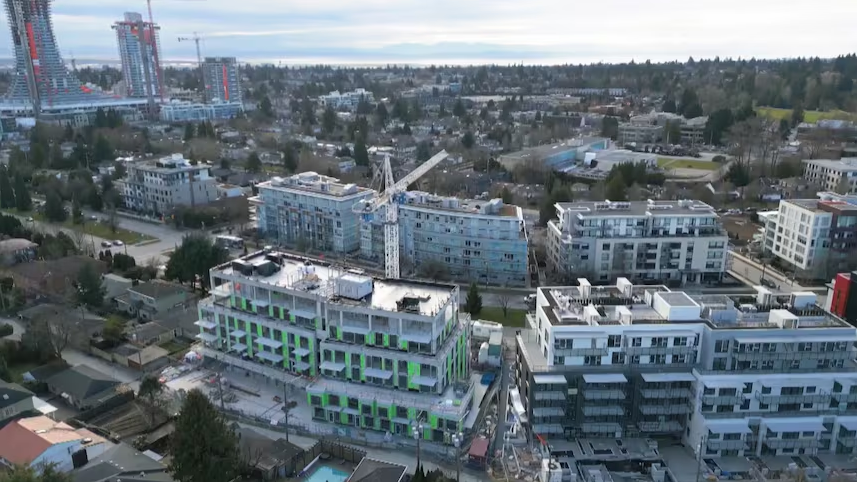
A major B.C. development association has cancelled its annual awards event, citing what it describes as one of the worst housing markets in decades.
Two years ago, nearly 600 industry leaders gathered at the Hyatt Regency in Vancouver for the Urban Development Institute’s 40th Awards of Excellence.
This year, the event will not go ahead.
UDI CEO Michael Drummond said in a social media post that the industry is facing deeply difficult conditions.
“We’re in one of the worst housing markets in decades,” Drummond wrote. “There is little to celebrate when the conditions to build are this broken.”
Expert Says Development Conditions Have Shifted Dramatically
Tom Davidoff, director of the University of British Columbia’s Centre for Urban Economics and Real Estate, said the description is fair.
He said the development industry is facing an extraordinarily difficult period after several strong years.
A few years ago, development conditions were much more favourable. Interest rates were low, population growth was strong and buyer demand was high.
Since then, interest rates have risen and population growth has slowed, putting downward pressure on prices and making many projects harder to justify financially.
Davidoff said it is now almost impossible for developers who bought land around 2021 or 2022 to complete projects today without losing money.
He described the combination of higher interest rates and slower population growth as a “double-whammy,” reducing returns for investors and discouraging developers from starting new projects.
Condo Projects Struggling to Move Forward
Development, planning and real estate consultant Michael Geller said the downturn is being felt across the industry, including by major developers.
He said condominiums were successful in Vancouver for many years, but many projects have struggled to proceed over the past three or four years.
Geller pointed to the recent court-ordered receivership of Westbank Corporation’s Joyce 2 rental tower as one example of the pressure facing developers.
He said changes in federal and provincial policy, including tighter immigration and development-related measures, are now being felt across the housing sector.
According to Geller, population growth that had previously helped drive housing demand has slowed, changing the economics of new projects.
Construction Sector Busy Now, But Worried About Future Work
The British Columbia Construction Association says there is still strong construction demand across several sectors, including industrial, commercial, institutional and residential projects.
BCCA president Chris Atchison said construction remains one of the province’s most active industries.
However, he said members are increasingly concerned about what the work pipeline will look like three, four and five years from now.
“There’s less work coming,” Atchison said. “And that doesn’t mean that we’re not busy now. It means that we’re looking ahead three and four and five years, and there’s a little bit of trepidation and uncertainty about what we might be doing.”
Delays Add Pressure Across the Industry
Atchison said contractors continue to face inflation, high financing costs, permitting delays and uncertainty around payment.
He said those issues are among the concerns that keep contractors up at night.
When projects are delayed, the effects can spread through the construction cycle, creating larger gaps between jobs and making it harder for workers and companies to plan ahead.
Atchison said major projects always involve risk and significant costs, but that risk should not fall most heavily on the people and companies actually building the province.
For developers, contractors and housing advocates, the cancelled awards event has become a visible sign of a broader slowdown affecting B.C.’s housing market.
News
Stay updated with the latest BC news stories, subscribe to our newsletter today.
SUBSCRIBE
© 2026 Innovatory Labs Inc. All rights reserved.
LINKS