
B.C. couple calls for ban on commercial trapping on public land after dog’s death
Subhadarshi Tripathy
1/22/20262 min read
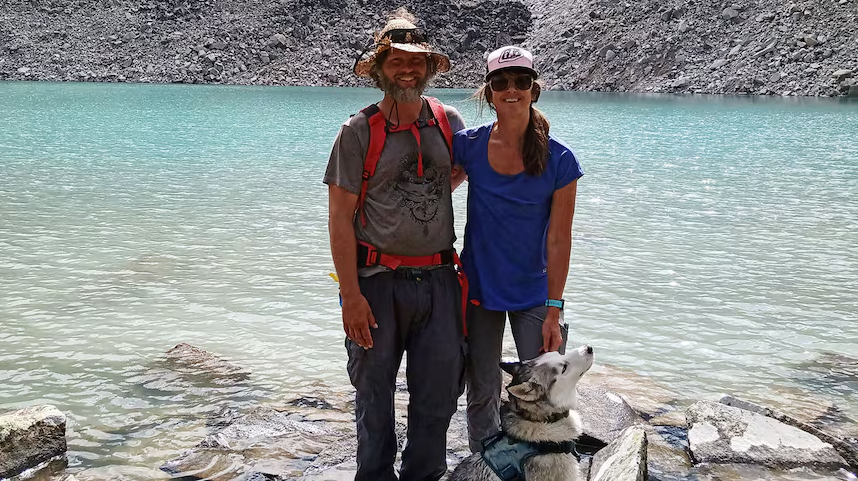
A couple from Radium Hot Springs say they had no idea commercial traplines operated on public land until their two-year-old husky, Moon, was killed in a baited trap earlier this month.
“It was a horrific experience that should never happen to anybody,” said Sean Boxall.
Boxall and his partner, Nicole Trigg, are now calling on the B.C. government to prohibit commercial trapping on public land, while stressing that their proposal would not affect Indigenous harvesting and trapping rights. They also want to raise awareness among backcountry users about the risks traps can pose to pets.
Commercial trapping in B.C. is regulated under the Wildlife Act and allows licensed trappers to kill fur-bearing animals such as lynx, foxes, bobcats, wolves and mink for their pelts. The B.C. Conservation Officer Service confirmed the trap that killed Moon was legal, properly licensed and compliant with regulations. It said no offence had occurred and no enforcement action would be taken. Officials also noted that warning signs were present, though signage is not always required.
The trap involved was a Conibear trap — a spring-loaded device designed to snap shut around an animal’s neck. While intended to kill target animals quickly, outcomes can differ when non-target animals are caught.
“It wasn’t a quick kill. It was several minutes,” Boxall said.
On Jan. 8, Boxall and Moon drove to a plowed road west of Radium Hot Springs, near a popular snowmobile and recreation area. While Boxall prepared his ski gear, Moon jumped out of the truck and began sniffing along the edge of the woods.
Boxall said he only noticed a small warning sign moments before hearing the trap snap shut.
“I yelled and ran, but it was already too late,” he said.
Boxall believes Moon was attracted by bait placed in the trap. He tried to free his dog but couldn’t open the device and badly cut his hand in the process. He eventually used a chainsaw to cut through the metal, but Moon had already lost consciousness.
“I saw the look in my little buddy’s face — pain, terror — it was torture,” he said.
In a statement, the B.C. Trappers Association said the loss of any pet is heartbreaking and emphasized the need for better public education about trapping practices. The association noted that pets should be kept on leash on public land during trapping season, as traps may be present and signage is not always mandatory.
The group described commercial trapping as a long-standing and regulated industry that plays a role in wildlife population management and disease control. It said trappers in Canada must follow International Humane Trapping Standards and adhere to strict rules on how often traplines are checked.
Wildlife advocates, however, argue that trapping is inherently inhumane. Lesley Fox, executive director of The Fur-Bearers, said traps don’t always function as intended and can lead to prolonged suffering or the death of non-target animals.
“There is no humane way to trap an animal,” Fox said, adding that her organization believes commercial fur trapping should be banned on public land.
At minimum, Fox said, the province should require mandatory warning signs for all active traps and increase buffer zones around roads, trails and residential areas.
The provincial government is currently accepting public feedback on proposed updates to the list of traps certified under International Humane Trapping Standards, with comments open until Feb. 13.
For Boxall and Trigg, Moon’s death has permanently changed how they see the backcountry.
“This isn’t about one dog,” Boxall said. “It’s about public safety, awareness and whether this kind of trapping belongs on land that everyone uses.”
News
Stay updated with the latest BC news stories, subscribe to our newsletter today.
SUBSCRIBE
© 2026 Innovatory Labs Inc. All rights reserved.
LINKS